
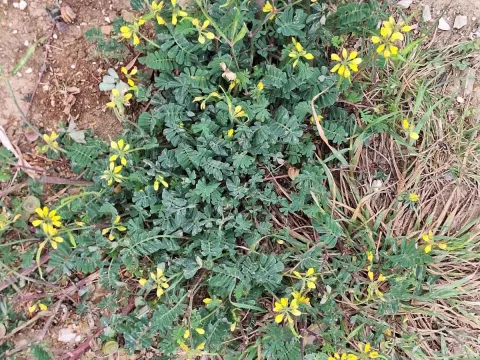
Coronilla securidaca
Coronilla securidaca
Coronilla securidaca (syn. Securigera securidaca) is a leguminous annual plant known for its adaptability and nutritional value in forage production. It serves as an efficient crop for rotation in various agricultural systems.
What the section contains
Coronilla securidaca
The sowing period typically begins in early spring, once soil temperatures consistently stay above 10 degrees Celsius. Early planting is essential to utilize winter moisture, which is critical for successful germination.
Seeds should be sown at a depth of 2 to 4 centimeters. Shallow sowing in well-prepared seedbeds ensures a rapid emergence, which helps the crop establish dominance over competitive weed species early on.
Row spacing is usually set at 15 to 20 centimeters. This density allows for optimal plant growth while facilitating light penetration to the lower leaves, which is vital for high biomass production.
Seed treatment before planting is highly recommended to protect the young seedlings from soil-borne pathogens and to stimulate root development, enhancing the plant's overall vigor.
Coronilla securidaca thrives in regions with abundant sunlight and can withstand prolonged dry spells once its deep root system is fully established. It is well-suited for temperate and semi-arid climates.
The crop prefers fertile, well-drained soils. Loamy or sandy loam soils provide the best conditions for growth, though it is quite tolerant of various soil textures provided that water stagnation is avoided.
A neutral to slightly alkaline soil pH is ideal. In acidic soils, liming may be necessary to improve the efficiency of nitrogen-fixing bacteria that reside in the root nodules.
Adequate soil aeration is crucial for the development of the symbiotic relationship between the plant and beneficial bacteria, which significantly reduces the need for nitrogen fertilizers.
While tolerant of heat, the crop performs best in moderate temperatures. Consistent moisture during the vegetative phase leads to superior growth and higher overall crop quality.
The primary use of Coronilla securidaca is as a high-protein forage crop. It is highly valued for its ability to produce substantial green matter that can be harvested as hay or silage.
In addition to its role in livestock feeding, this legume is an excellent green manure crop. It enhances soil structure and increases nitrogen levels through its natural nitrogen-fixing biological activity.
The yield of green biomass depends heavily on the crop management practices employed, including timely weed control and the prevention of nutrient deficiencies during the active growth period.
Seed production is a secondary but profitable endeavor. With proper management, the crop can yield consistent amounts of high-quality seeds suitable for future planting or trade.
The integration of this crop into standard rotations helps break disease cycles and improves the productivity of subsequent cereal crops through enhanced soil fertility and reduced pressure from soil-borne pests.
Common fungal diseases such as powdery mildew and root rots are the most significant threats to yield. These are particularly prevalent during periods of high humidity and poor air circulation.
Pests like aphids and root-feeding weevils can cause significant damage by depleting the plant's energy and interfering with the nutrient uptake of the crop during critical growth phases.
Effective pest management relies on a combination of cultural practices, such as proper crop rotation, and the selection of healthy, disease-free seed lots for planting each year.
Biological control agents are often effective for managing aphid populations. If chemical intervention is necessary, it must be timed carefully to avoid harming beneficial insects.
Regular scouting of the fields is essential for early detection of issues, allowing for rapid corrective actions that prevent the spread of diseases or pest outbreaks across the entire crop.
Harvesting for green fodder should occur at the peak of the flowering stage, just before the seeds begin to harden. This stage offers the best balance of protein content and fiber digestibility.
When harvesting for seed, it is important to wait until the pods are mature and have changed color to a deep brown, indicating that the seeds have reached physiological maturity.
Direct combining is common for seed harvesting, though careful adjustment of the combine settings is necessary to reduce grain breakage and ensure a clean final product.
Post-harvest drying is essential to reduce seed moisture levels to safe storage standards. Proper storage in cool, dry conditions prevents mold and maintains seed viability for the following season.
Efficient handling during the harvest period minimizes losses and ensures that the maximum nutritional or economic value is captured from the crop cycle.