
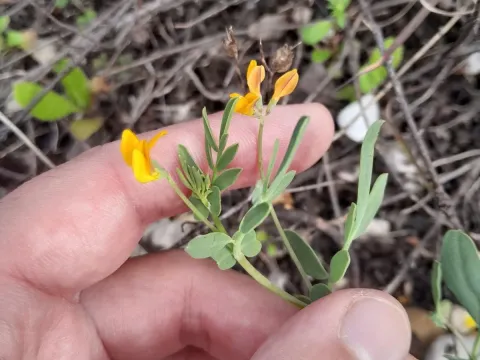
Coronilla repanda
Coronilla repanda
Coronilla repanda is an annual herbaceous plant belonging to the Fabaceae (legume) family. It is known for its spreading growth habit, which provides excellent ground cover in suitable environmental conditions.
What the section contains
Coronilla repanda
The plant originates from Mediterranean environments, favoring well-drained, sandy, or rocky soils. It is well-adapted to habitats with high solar radiation and demonstrates significant resilience against periods of low rainfall.
As a legume, Coronilla repanda enhances soil fertility through nitrogen fixation. This characteristic makes it a valuable species for improving the nitrogen profile of agricultural soils in regions where it is grown.
The plant is sensitive to waterlogged conditions, making proper soil drainage a primary requirement for successful cultivation. It thrives in open fields where it does not face competition for light.
Its deep and extensive root system allows it to access subsoil moisture, which is a key factor in its survival during late spring and early summer droughts before it reaches maturity.
The optimal sowing time for Coronilla repanda is in early spring, once soil temperatures have consistently risen. Providing a stable thermal environment is essential for successful germination and early establishment.
Seeds should be sown at shallow depths to ensure uniform emergence. A consistent planting density helps the crop establish a closed canopy, which is effective for inhibiting the growth of competing weeds.
Preparing a clean seedbed is highly recommended to give the seedlings a head start. Avoiding aggressive weed competition during the first weeks of growth is critical for the overall yield of the crop.
Firming the soil after sowing by rolling is a standard practice to ensure adequate seed-to-soil contact. This step helps optimize moisture uptake, particularly in drier growing seasons.
The plant shows vigorous early growth, which is necessary to overcome potential environmental stressors. Proper moisture management immediately after sowing ensures the best possible start for the stand.
The harvesting of Coronilla repanda for green biomass should take place at the peak of the flowering stage. At this developmental phase, the nutritional value, specifically protein content, is at its maximum.
The crop can be cut and swathed to create hay, which is often used as a supplementary feed for livestock. The structural characteristics of the plant allow for efficient drying and curing processes in the field.
For seed production, harvesting must be timed carefully to coincide with the maturity of the pods. Late harvesting can lead to excessive seed shattering, resulting in significant yield losses.
Post-harvest processing involves threshing and cleaning the seeds to remove debris and pod remnants. Proper storage in a low-humidity environment ensures that seed viability is maintained for the following season.
Adherence to a precise harvesting schedule is vital to balance the quantity of the harvested biomass with the quality of the nutritional output required for feed management.