
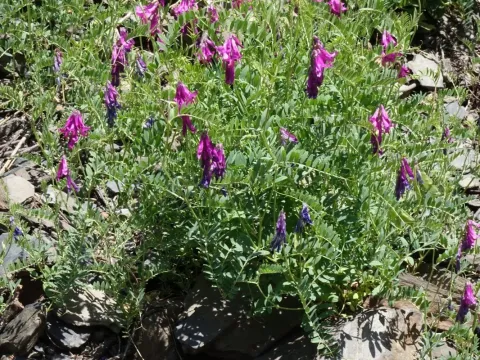
Mountain vetch
Vicia alpestris
Mountain vetch (Vicia alpestris) is a valuable perennial legume belonging to the Fabaceae family. For optimal establishment, sowing is typically carried out in early spring once the soil temperature consistently reaches 5-8 degrees Celsius, ensuring favorable conditions for germination.
What the section contains
Mountain vetch
Successful cultivation requires a well-prepared seedbed that is free of weeds and has a fine, crumbly structure. Seeds should be sown at a depth of 2 to 3 centimeters to ensure good contact with soil moisture, which is critical for early seedling development.
Standard sowing rates depend on seed purity and germination potential, usually employing row seeding techniques. This approach promotes uniform stand density and facilitates mechanical weeding, reducing plant competition during the establishment phase.
Inoculation of seeds with specific nitrogen-fixing bacteria is strongly recommended before planting. This biological treatment promotes the development of root nodules, allowing the crop to thrive on varying soil qualities while enhancing long-term nitrogen fertility.
During the first year, the crop focuses on root system expansion. Careful management of field traffic and weed control is essential during this period to ensure the plants become established well enough to provide high yields in subsequent growing seasons.
This crop is well-adapted to cooler climates, demonstrating significant hardiness and resistance to temperature fluctuations. It is particularly suited for high-altitude regions or areas with temperate climates, where it can survive winter conditions effectively.
Mountain vetch prefers light to medium-textured soils, such as loams or sandy loams, with good drainage. Avoiding waterlogged soil is vital, as excessive moisture can lead to root rot and severely diminish stand health and productivity.
While the plant is hardy and thrives in relatively poor soils due to its nitrogen-fixing capabilities, it performs best in neutral to slightly acidic soil conditions. Supplemental phosphorus and potassium fertilization can help maximize biomass production.
Adequate sunlight is necessary for robust growth; therefore, planting sites should be open and free from excessive shading. Plants grown in low-light environments often exhibit reduced vigor and may be more susceptible to stem lodging.
Maintaining proper soil aeration is key to the crop's long-term health. Periodic cultivation between rows, especially in the first year, helps prevent surface crusting and promotes oxygen exchange in the root zone, supporting healthier plant development.
Mountain vetch reaches peak productivity during the second and third years of growth. Yields of high-quality forage depend largely on cutting management and environmental factors, with the potential for multiple cuts per season in favorable climates.
To maximize nutrient content, harvesting should take place at the early flowering stage. At this developmental phase, the plants provide an ideal balance of protein and digestible carbohydrates, making them an excellent choice for hay or haylage production.
Proper harvesting techniques ensure that leaf retention is maximized, preserving the protein-rich parts of the plant. Since mountain vetch dries relatively quickly, it can be efficiently processed into hay, provided that weather conditions allow.
When producing seeds, it is crucial to time the harvest carefully to avoid shatter loss. Harvesting should begin once the pods show signs of yellowing but before they dry out completely and burst, as this minimizes yield loss in the field.
Long-term maintenance of the field involves applying fertilizers after each cut to replenish soil nutrients. This strategic management practice helps sustain vigor and extend the productive lifespan of the perennial stand for several years.
Fungal diseases, such as powdery mildew and anthracnose, represent the primary health threats to the crop. These pathogens typically thrive in humid, stagnant conditions, making air circulation within the stand a priority for disease prevention.
Pea leaf weevils and other root-feeding insects can cause significant damage during the early growth stages. Integrated pest management strategies, including the use of resistant varieties and targeted treatments, are essential to protect the seedlings.
Aphid infestations may occur, causing leaf deformation and overall growth stunting due to sap-feeding. Regular monitoring of the field throughout the growing season allows for early intervention, which can prevent the need for more intensive chemical treatments.
Nematode issues can be problematic in heavy or poorly drained soils. Practicing a healthy crop rotation cycle is the most effective way to break the life cycle of these pests and maintain the overall phytosanitary quality of the agricultural land.
The use of certified, disease-free seed is the first line of defense against pathogens. Combined with proper density management and soil health practices, growers can maintain a healthy, productive stand of mountain vetch for many years.