
Mountain peanut
Arachis monticola
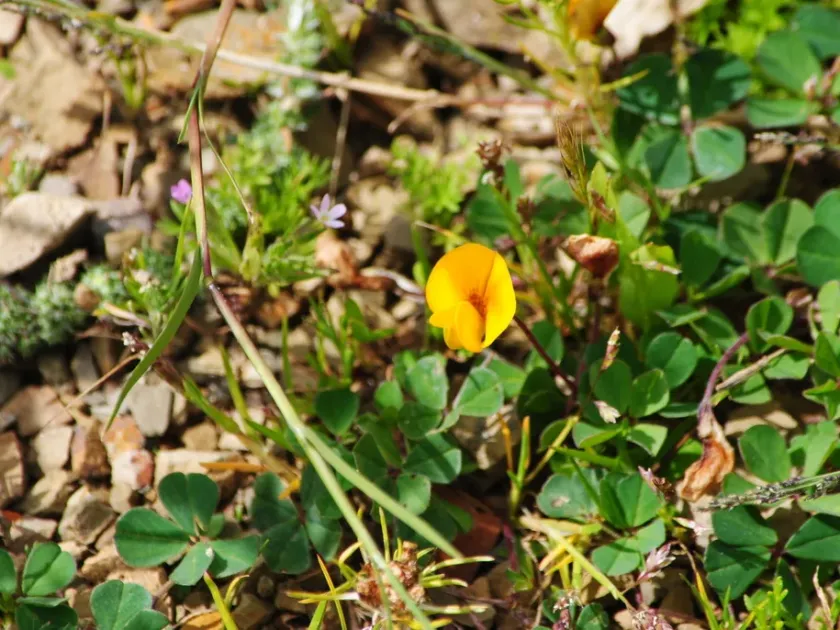
Description
Sowing dates
Arachis monticola is primarily a wild species, and therefore sowing is usually conducted for research or genetic conservation purposes.
Seeds should be planted in late spring once the danger of frost has passed and the soil has reached a stable, warm temperature.
The optimal planting depth is about 3–5 cm, ensuring the seeds are well-covered yet able to emerge easily through the soil surface.
Proper spacing between rows is essential to allow the pegging process, where the flowering stalks penetrate the ground to produce fruit.
The soil should be kept moist during the germination phase, but avoiding waterlogged conditions is critical for seedling health.
Growing requirements
The mountain peanut is a member of the Fabaceae family and is recognized as a direct wild ancestor of the domesticated peanut (Arachis hypogaea).
It is native to the high-altitude regions of the Andes, specifically in northern Argentina and parts of Bolivia.
This species thrives in well-drained, sandy soils that allow the geocarpic fruit to penetrate the ground easily without resistance.
Arachis monticola is highly adapted to cooler mountainous environments but requires full sun exposure for optimal vegetative development.
It prefers a climate with distinct diurnal temperature fluctuations, which helps in triggering the reproductive cycles of this plant.
Yield
In terms of agricultural production, the yield of the mountain peanut is significantly lower than that of commercial peanut varieties.
The pods are small and typically contain fewer seeds, making them less suitable for large-scale human food consumption.
The primary value of the yield lies in the genetic diversity stored within its seeds, which researchers use to breed better resistance in common peanuts.
Because the plant spends most of its energy on survival and adaptation to rugged terrain, energy allocation to fruit weight remains low.
The harvest index is minimal compared to modern cultivars, yet the botanical efficiency of its reproduction remains perfectly adapted to its ecosystem.
Main diseases and pests
Like other legumes, this species is susceptible to various fungal pathogens, including leaf spot and soil-borne root rot.
Soil-dwelling pests, such as wireworms and nematodes, pose a consistent threat to the subterranean pods and the plant's root system.
Viral infections transmitted by aphids can affect plant vigor, requiring strict insect control management in experimental fields.
Environmental stress, such as prolonged flooding, can rapidly lead to pod decay due to the plant's sensitivity to oxygen depletion in the soil.
Integrated pest management strategies are often required to protect these wild germplasm accessions from localized pest outbreaks.
Harvesting
Harvesting involves the careful extraction of the entire root mass from the soil, as the pods are developed underground via geocarpy.
Timing is critical; the plants should be lifted when the foliage shows signs of senescence to ensure the seeds have fully matured.
Once harvested, the pods must be thoroughly cleaned of soil and air-dried to prevent the onset of mold and preserve seed quality.
Handling requires manual care to avoid damaging the brittle shells, which protect the kernels during the storage period.
Seeds intended for future planting should be stored in cool, low-humidity conditions to maintain long-term viability and vigor.