
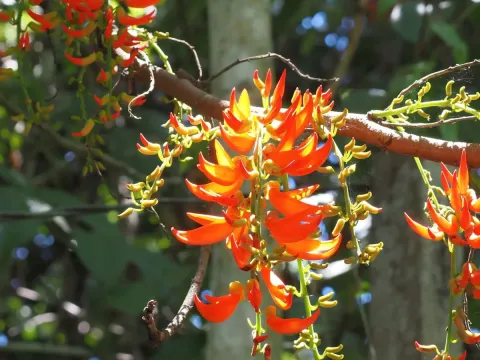
Mucuna bennettii
Mucuna bennettii
Mucuna bennettii is a perennial tropical vine that is typically propagated at the onset of the rainy season in its native habitat. For cultivation in temperate regions, seeds are sown in protected environments at stable soil temperatures no lower than 22-25 degrees Celsius.
What the section contains
Mucuna bennettii
Prior to sowing, it is recommended to lightly scarify the hard seed coat to enhance germination rates. Seeds should be planted at a depth of 2–3 centimeters in a lightweight, well-draining substrate enriched with organic matter.
Germination is a slow process that requires high air humidity; therefore, containers are often covered with plastic film until the first seedlings emerge. Maintaining a stable temperature without drastic fluctuations is essential for successful seedling development.
Transplanting to a permanent location is performed once the plant has developed 3–4 true leaves. Given the plant's vigorous root system, large containers with an efficient drainage layer are required for container-grown specimens.
In tropical landscaping or commercial production, plants are spaced at least 2–3 meters apart. The vine is characterized by an intensive growth rate and requires significant structural support to reach its full potential.
Mucuna bennettii belongs to the Fabaceae family and is a robust, woody climber. Native to the tropical rainforests of New Guinea, it requires high ambient humidity and complete protection from frost to thrive.
The plant prefers well-lit locations with filtered light, although it can tolerate partial shade. Direct midday sun in hot climates may cause leaf scorch, making locations with afternoon shade ideal for healthy growth.
The cultural requirements for soil are moderate, favoring fertile loamy or sandy soils with a neutral to slightly acidic pH. Excellent water permeability is critical, as waterlogging can cause fatal root damage to this species.
Consistent and abundant watering is necessary, especially during the active growth phase. In dry periods, the vine is sensitive to water stress, which manifests as loss of leaf turgor and the premature shedding of flower buds.
As an aggressive climber, Mucuna bennettii requires sturdy structural support. Trellises, heavy-duty metal structures, or reinforced frames are used to support the considerable weight of the plant's dense foliage and iconic flame-colored flowers.
In greenhouse conditions, Mucuna bennettii is frequently targeted by spider mites, which thrive in low-humidity environments. Regular foliage misting and maintaining an optimal microclimate are essential to minimize the risk of infestation.
Aphids and mealybugs can attack young shoots and developing flower clusters, draining vital sap and suppressing growth. When symptoms appear, the application of environmentally friendly insecticides is recommended to manage populations.
Root rot represents a significant threat during periods of overwatering or when using heavy, poorly draining substrates. The proliferation of fungal pathogens is often linked to stagnant air, making consistent ventilation a mandatory cultural practice.
The leaves may be susceptible to fungal leaf spots when high humidity coincides with cool temperatures. Prompt removal of affected plant parts helps prevent the spread of fungal spores throughout the canopy.
Disease prevention is primarily based on precise irrigation management, avoiding overcrowding of plants, and routine inspection of the undersides of leaves. A plant with high growth vigor typically exhibits natural resistance to most common tropical pests.