
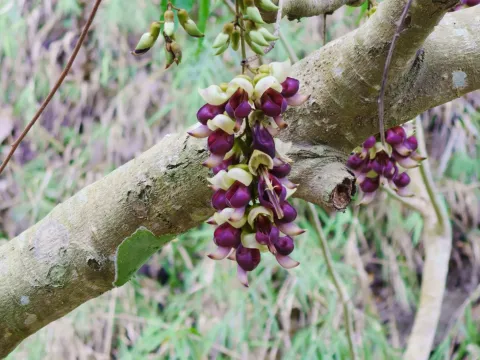
Mucuna macrocarpa
Mucuna macrocarpa
Sowing of Mucuna macrocarpa should be timed to coincide with the beginning of the warm season, ensuring that the soil is sufficiently warm for germination.
What the section contains
Mucuna macrocarpa
Seeds often benefit from pre-sowing treatments such as scarification or overnight soaking, which significantly improves the rate of emergence.
It is crucial to prepare the soil by incorporating organic matter to provide a fertile base for the emerging seedlings to establish their initial root system.
Spacing must be generous, as this vigorous vine species produces an extensive vegetative growth that requires ample space to spread and climb effectively.
The seeds are typically sown at a depth of several centimeters to protect them from surface drying and to provide stability for the early growth stages.
Mucuna macrocarpa is a member of the Fabaceae family, characterized by its climbing habit and woody structure when mature.
This crop is highly adapted to tropical environments and thrives in conditions where there is abundant heat and high humidity throughout the growing season.
Well-drained, fertile soil is essential for success, although the plant displays a degree of tolerance to various soil types if given enough water.
The presence of a sturdy trellis or support system is non-negotiable for large-scale cultivation to keep the vines off the ground and improve airflow.
Regular monitoring of soil moisture levels is required during the flowering and pod-forming stages to ensure optimal productivity of the crop.
The primary threats to this crop include fungal infections of the roots, often exacerbated by waterlogging or poor drainage in heavy soil types.
Various insect pests, including leaf-eating larvae and certain beetle species, can pose a risk to the plant's structural integrity and overall vigor.
Preventive agricultural practices such as maintaining proper plant spacing and crop rotation are the most effective defenses against common pathogens.
Nematode populations in sandy soils may require specific soil treatments to prevent root damage and ensure the plant remains productive.
Integrated pest management strategies are recommended to keep damage levels low while maintaining the ecological balance of the surrounding area.
Harvesting is conducted when the pods reach full maturity and the outer husks begin to dry, signaling that the internal seeds are fully developed.
Care must be taken during the harvesting process as pods can shatter easily, potentially causing significant yield losses if they are collected too late.
The harvested pods should be dried in a ventilated area to ensure they reach the correct moisture content for stable, long-term storage of the seeds.
Economic uses of the plant are diverse, ranging from its role as a green manure crop that improves soil fertility to its use in medical research.
Following post-harvest drying, the seeds are sorted and cleaned to meet industry quality standards for their intended use in agriculture or processing.