
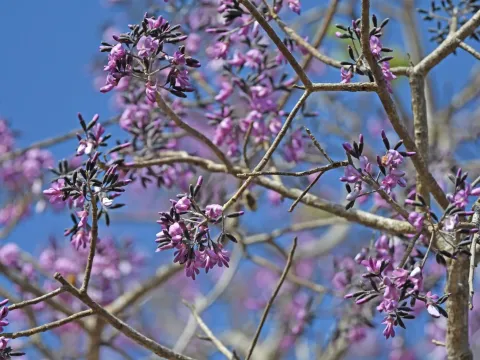
Vatairea
Vatairea
Vatairea is a genus of large, deciduous trees belonging to the Fabaceae family, native to the tropical regions of Central and South America, where they thrive in distinct climatic conditions.
What the section contains


Vatairea
These trees are typically found in moist tropical forests and are highly dependent on specific precipitation patterns, often exhibiting a dormant phase during the dry season.
For optimal growth, Vatairea requires deep, well-drained, nutrient-rich soils, as the species is sensitive to waterlogged conditions that can inhibit its root development.
As a light-demanding species, it requires high levels of solar radiation to maintain its growth rate and structural integrity, making it a prominent element of the upper canopy.
The biological adaptation of this plant includes the ability to fix atmospheric nitrogen through symbiosis with soil bacteria, which provides a significant advantage in competitive tropical ecosystems.
The wood harvested from Vatairea is highly prized in the timber industry for its density, hardness, and exceptional resistance to decay, making it suitable for high-end construction and furniture.
Beyond timber, parts of the tree, including the bark, are studied for secondary metabolites that hold potential for various industrial and traditional medical applications.
Industrial timber production requires a long-term investment, as the tree takes several decades to reach the size and density required for high-quality lumber markets.
- Sustainable harvesting practices ensure the longevity of the crop.
- Selective logging helps maintain the genetic diversity of forest stands.
- Efficient processing improves the final quality of wood products.
Sustainable management remains essential to balancing the economic demand for tropical timber with the ecological imperative of preserving biodiversity in native habitats.
Root rot and fungal infections pose significant threats, particularly when the tree is subjected to poor soil drainage or excessive stagnant water in its growing area.
Wood-boring insects are the most problematic pests, capable of causing extensive damage to the heartwood and significantly reducing the commercial value of the timber.
Deforestation and habitat fragmentation are the primary external threats, reducing the overall population and impacting the natural regeneration capacity of Vatairea species.
Climate change, specifically the alteration of humidity cycles, can weaken the trees' natural defenses, making them more susceptible to local pathogen outbreaks.
Effective management strategies include site-specific monitoring and the application of integrated pest management practices to protect vulnerable stands from biological degradation.