
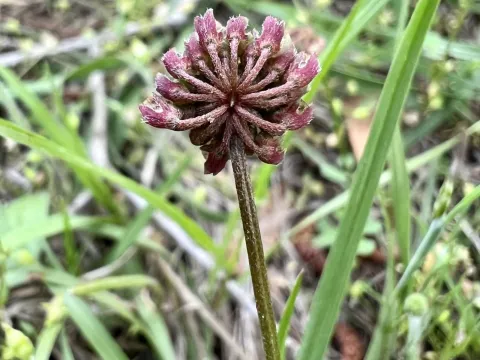
Carolina clover
Trifolium carolinianum
Carolina clover (Trifolium carolinianum) is an annual or biennial legume that typically propagates itself through natural reseeding. The best window for germination occurs in early spring or autumn, provided there is adequate moisture in the soil to support the establishment of young seedlings.
What the section contains
Carolina clover
Because it is frequently found in native pastures, large-scale controlled seeding is uncommon. When overseeding is necessary, seeds should be sown at a shallow depth of approximately 1 to 2 centimeters to ensure good soil-to-seed contact without burying them too deep to sprout.
This species thrives in sunny environments with well-drained soil. It displays significant adaptability to various soil textures, including sandy and loamy soils, which are common across its native distribution range in North America.
Moisture availability is critical during the initial growth stages. While Carolina clover exhibits a moderate tolerance to dry spells, it requires consistent rainfall throughout the spring to maximize its biomass production before the onset of summer heat.
The plant performs best in temperate climates. Extremely high temperatures often trigger the transition from vegetative growth to flowering and seed set, signaling the end of the plant's active life cycle for the season.
The primary agricultural use of Carolina clover is as a forage component in grazing lands. It provides early-season nutrition for livestock, making it a valuable addition to pasture management systems where early green forage is highly desired.
Beyond its feed value, Carolina clover contributes to soil health through nitrogen fixation. By improving the nitrogen content of the soil, it supports the growth of companion grasses, ultimately increasing the overall productivity of the pasture ecosystem.
The most common threats to the health of the stand are fungal pathogens, such as leaf spot diseases and root rots. These are typically more prevalent in seasons with excessive humidity or poor soil drainage, which can weaken the plants and reduce their vigor.
Insect pests, including weevils and aphids, may occasionally attack the foliage. However, in healthy and well-managed pastures, the impact of these pests is usually manageable and rarely threatens the survival of the population or the utility of the forage.