
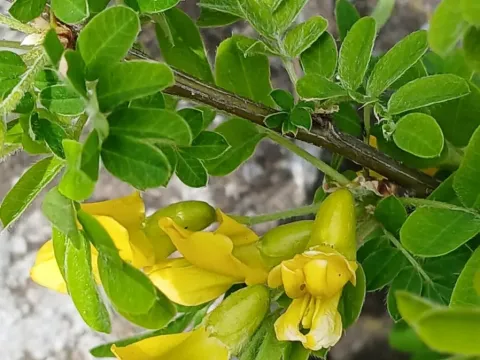
Caragana
Caragana Fabr.
Caragana (Caragana Fabr.) is a genus of deciduous shrubs and small trees belonging to the legume family (Fabaceae). It is widely recognized in agriculture for its resilience and ability to thrive in harsh environments where other crops struggle.
What the section contains

Caragana
Originating from parts of Europe and Asia, the plant has a wide natural distribution. Its evolutionary adaptation to extreme climates makes it an essential species for northern regions and arid steppe territories, demonstrating remarkable frost resistance.
In terms of soil requirements, Caragana is highly undemanding. It grows well in sandy, rocky, and low-nutrient soils, significantly contributing to land reclamation projects. It prefers well-drained locations and avoids areas prone to waterlogging.
The biological significance of this genus lies in its symbiotic relationship with nitrogen-fixing bacteria. By enriching the soil with nitrogen, Caragana enhances site productivity, which is vital for sustainable land management and restoring damaged ecosystems.
Agricultural utility includes the establishment of shelterbelts, which protect crops from wind erosion. Additionally, the plant is valued in apiculture as a reliable source of early-season pollen and nectar for pollinators.
Caragana health is periodically challenged by several diseases, with powdery mildew being the most common. This fungal issue typically manifests during periods of high humidity and poor air circulation within the shrubbery.
Insect pests such as aphids and various leaf-feeding caterpillars represent the primary biological threat. These pests can cause significant defoliation, particularly in young, sensitive plantations during the peak spring growth phase.
Seed-eating beetles pose a specific risk to the reproduction of the plant. Monitoring of seeds is recommended if the objective is the collection of material for further planting or reforestation programs.
Effective management includes maintaining proper spacing between plants to prevent the buildup of humidity and disease pressure. Sanitary pruning is a critical practice to remove dead or infected wood.
Integrated pest management strategies are encouraged, focusing on biological controls and minimal chemical intervention. By fostering a balanced ecosystem, growers can ensure the long-term health and vigor of their Caragana stands.