
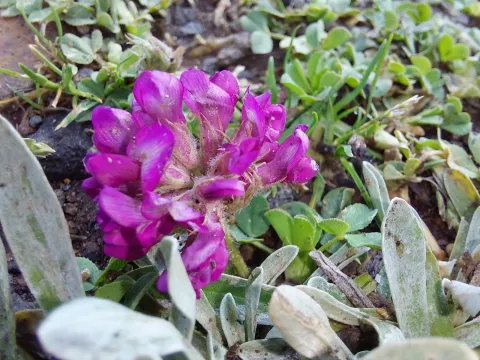
Burchell's clover
Trifolium burchellianum
Burchell's clover (Trifolium burchellianum) is a perennial legume species native to the high-altitude regions of eastern and southern Africa. It belongs to the Fabaceae family and is well-adapted to the cooler environments of its natural range.
What the section contains
Burchell's clover
Sowing should ideally occur at the onset of the rainy season to ensure adequate moisture for seed germination. Farmers typically use mechanical drilling to ensure uniform seed distribution and optimal plant density across the managed pasture area.
Seedbed preparation is critical for this species. The soil should be finely tilled, and seeds should be sown at a depth of 1 to 2 centimeters to ensure protection while allowing successful emergence in favorable conditions.
In many agricultural setups, Burchell's clover is interseeded with perennial grasses to create a balanced forage mixture. This approach leverages the nitrogen-fixing capabilities of the clover while providing structural support for the sward.
Once planted, rolling the soil surface helps establish good soil-to-seed contact. This practice promotes consistent moisture uptake, which is essential for uniform establishment in varied soil profiles.
This clover species thrives in cool to moderate climates, particularly in elevated areas where temperatures are not excessively high. While it exhibits good cold tolerance, it may struggle under prolonged heat stress or severe drought conditions.
Well-drained soils, such as loams or sandy loams, are ideal for cultivation. The species is sensitive to waterlogging, so fields should have efficient drainage systems to prevent root rot and other moisture-related issues during rainy periods.
As a nitrogen-fixing legume, Burchell's clover acts as a natural fertilizer. Through its symbiotic relationship with rhizobia bacteria, it contributes to soil fertility, making it an excellent component for sustainable pasture systems.
Sunlight exposure is a major driver of biomass production. Fields should be situated in open areas to maximize photosynthesis, which directly influences the vegetative vigor and nutrient quality of the forage provided.
Fertilization with phosphorus and potassium is often recommended based on soil analysis. These nutrients support robust root growth and help the plants withstand seasonal transitions or heavy grazing pressure.
The primary use of Burchell's clover is for livestock forage. Its high leaf-to-stem ratio and nutritional density make it a highly palatable option for cattle and sheep, significantly contributing to weight gain and overall animal health.
The yield of green matter is best managed through rotational grazing. This method prevents overgrazing of individual plants and ensures that the clover has sufficient time to recover and regenerate, maintaining high productivity levels.
Nutritional profile studies show that Burchell's clover maintains a high protein content during its vegetative and early budding stages. This makes it an ideal supplement to standard grass diets, filling the nutritional gap in traditional pastoral systems.
Harvesting for hay is possible if the field is cut at the peak of the budding phase. Proper curing techniques ensure that the protein and vitamin content of the forage are preserved for winter feeding when pasture growth slows down.
The longevity of the stands makes this clover a long-term asset for land managers. With minimal inputs and proper grazing pressure, the crop can persist for several years, providing stable returns on investment for livestock operations.
Fungal diseases like powdery mildew and rust are common threats to Burchell's clover, particularly in high-humidity climates. Integrated pest management and ensuring adequate airflow between plants can significantly reduce the impact of these diseases.
Various insect pests, such as clover weevils or aphids, may target the foliage and flowers. Regular scouting and biological controls are encouraged to prevent outbreaks that could compromise the quality and quantity of the forage output.
Overgrazing remains a significant threat to the survival of the stand. Allowing livestock to graze too close to the soil surface can damage the crown of the plant, hindering its ability to regrow and reducing its long-term viability.
Weed encroachment can compete for light, water, and nutrients in the early stages of establishment. Regular field inspections and the use of competitive seed mixtures help maintain a healthy sward that can outcompete unwanted invasive species.
Continuous monitoring of plant health allows for early detection of nutrient deficiencies or biological attacks. By acting promptly, farmers can protect the integrity of their clover stands and ensure consistent productivity throughout the growing season.