
Butea
Butea
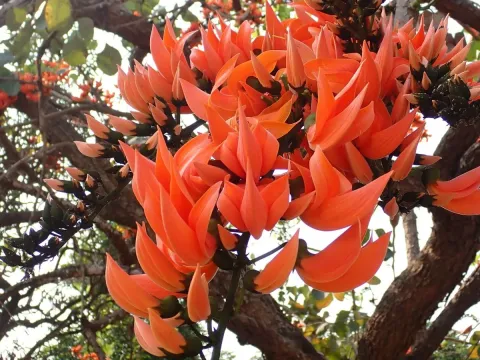
Butea, commonly known as the Flame of the Forest, is a member of the Fabaceae family, prized for its ecological benefits and commercial applications in the tropics.
What the section contains


Butea
Propagation is primarily carried out via seeds, which should be sown at the onset of the monsoon season to ensure that young seedlings establish deep root systems.
Pre-treatment of seeds is crucial to break dormancy and ensure uniform germination, as the outer seed coat is naturally resistant to water absorption.
In nursery settings, it is essential to maintain proper spacing between seedlings to prevent competition for light and nutrients, which can stunt early growth.
Successful establishment depends on consistent irrigation during the first growing season until the root system is robust enough to sustain the plant during dry spells.
The plant thrives in tropical and subtropical climates, requiring distinct wet and dry seasons to trigger its characteristic vibrant flowering cycle.
Butea prefers well-drained loamy soils and is intolerant of waterlogged conditions, which can lead to rapid root decay and plant mortality.
As a leguminous tree, Butea contributes to soil fertility by fixing atmospheric nitrogen, making it a valuable component in agroforestry systems and land reclamation.
Adequate solar exposure is mandatory for optimal development; therefore, sites with full sun are preferred over areas prone to excessive shading.
While the tree is drought-tolerant once mature, young specimens require protected environments and consistent care to ensure survival during the initial developmental phase.
Defoliating insects and leaf-miners are the most frequent pests that affect Butea, often requiring integrated pest management to prevent significant yield losses.
Fungal pathogens pose a major risk in humid environments, leading to stem cankers or root rot, particularly in plantations with insufficient drainage.
Phytoplasma-induced diseases can cause severe physiological stress, resulting in stunted leaf growth and a significant decline in flower production quality.
Prevention involves regular field inspections and the removal of infected branches to reduce inoculum density within the growing area.
Effective management requires a balanced approach, emphasizing sanitation and the maintenance of vigorous, healthy plants that can resist common threats naturally.
Economic harvesting of Butea involves the careful collection of kino (a resinous gum) from the bark through specialized tapping techniques during specific periods.
Flowers are harvested manually upon full bloom, as they are a significant source of natural yellow-to-orange dye used extensively in traditional textile coloring.
Seeds are harvested once the pods dry naturally on the tree, after which they are processed to extract oils used in various industrial and medicinal formulations.
Bark and foliage are also collected according to harvest schedules designed to minimize stress on the tree while maximizing the yield of active chemical compounds.
Post-harvest handling is critical, requiring immediate drying of materials under controlled conditions to preserve the integrity of the harvested plant parts.