
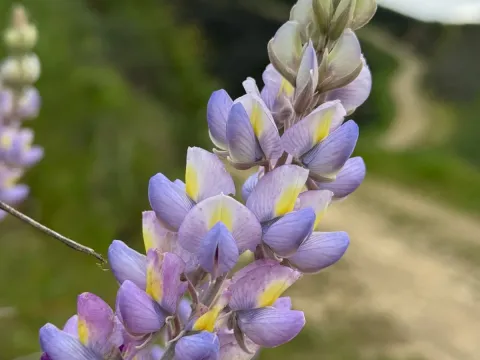
Bush lupine
Lupinus excubitus
The Bush lupine (Lupinus excubitus) is a perennial shrub belonging to the Fabaceae family, native to the arid regions of California. It is well-known for its impressive ability to thrive in challenging environments with nutrient-poor, rocky soil conditions.
What the section contains
Bush lupine
This crop requires excellent drainage to survive; the root system is highly adapted to sandy or gravelly textures but suffers significantly from waterlogging, which can lead to rapid decay of the taproot.
The plant exhibits remarkable drought tolerance, featuring greyish-green, pubescent foliage. The fine hairs on the leaves serve to reflect sunlight and minimize moisture loss through transpiration, making it an ideal candidate for dry-farming projects.
Cultivation requires full sunlight exposure. In its natural habitat, it survives on minimal rainfall and is highly effective at nitrogen fixation, which enriches the surrounding soil profile significantly.
From an agronomic perspective, the species serves both as a soil improver and a floral resource. Its dense, upright growth habit makes it a reliable choice for stabilizing soils that are prone to erosion in semi-arid climatic zones.
The primary threats to this legume crop are soil-borne pathogens, such as Fusarium wilt and Phytophthora root rot, which are triggered by poor drainage or over-irrigation during the growing season.
Insects such as the lupine aphid and various lepidopteran larvae can cause substantial damage to buds and developing pods, necessitating integrated pest management strategies to protect the yield.
Powdery mildew represents a secondary threat, particularly in coastal regions or areas with high humidity levels and limited air circulation, which can stress the plant and reduce its vigor.
Management of these threats involves crop rotation, which is vital to disrupt the life cycles of soil pathogens specific to legumes and to maintain overall field hygiene.
Monitoring the plant for signs of nutritional deficiencies or pest infestation during the early vegetative stage is crucial for ensuring the crop reaches its full productive potential.