
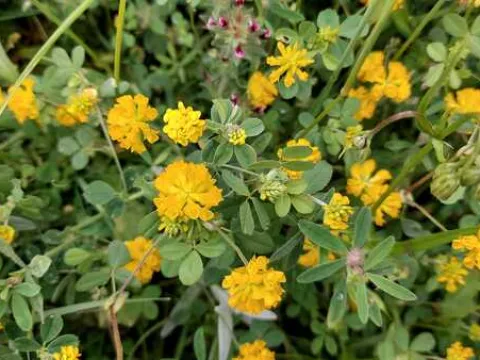
Bruttium clover
Trifolium brutium
Bruttium clover (Trifolium brutium), belonging to the Fabaceae family, is a significant forage legume that thrives in specific climatic conditions. The optimal sowing time is typically early spring, as soon as the soil temperatures reach 8-10 degrees Celsius, ensuring vigorous germination.
What the section contains
Bruttium clover
Seedbed preparation is vital; it should be fine-tilled and leveled to maintain uniform soil moisture contact. Seeds are planted at a shallow depth of 1-2 centimeters to prevent exhaustion of energy reserves during sprout emergence.
Standard row spacing of 15 centimeters is recommended to balance plant competition and maximize dry matter production per hectare. This density also facilitates easier weeding and management of the crop during its early development phase.
Pre-sowing seed treatment, including cleaning and occasional scarification, significantly improves field emergence. Using certified seeds adapted to the local environment is a prerequisite for achieving high-quality forage yields.
The seeding rate generally ranges from 12 to 16 kg per hectare, depending on seed quality and soil type. Maintaining this density ensures adequate air circulation within the stand, reducing the risk of fungal outbreaks.
This species prefers moderately moist, loamy, or sandy-loam soils with a neutral or slightly acidic pH. Proper soil drainage is essential, as waterlogging is detrimental to the survival of nitrogen-fixing root nodules and overall plant vigor.
Bruttium clover is noted for its good drought tolerance, making it an excellent candidate for regions with unpredictable rainfall patterns. Its root system efficiently utilizes deep soil water reserves, maintaining growth during dry spells.
High levels of solar radiation are required for optimal biomass production. While it can survive in partial shade, the best results in terms of protein content and total yield are achieved in open, sunny field conditions.
Soil nutrient management should focus on phosphorus and potassium, which enhance root strength and overwintering capacity. Nitrogen application should be kept low to encourage natural symbiosis with soil bacteria, which fixes atmospheric nitrogen.
The plant grows best in temperatures ranging from 18 to 24 degrees Celsius. It exhibits moderate frost resistance, allowing it to adapt well to temperate zones with mild winters, typical of its native range.
Fungal diseases like powdery mildew pose a constant threat, especially during high-humidity periods. Proper field ventilation through correct plant spacing is the first line of defense against these pathogenic fungi.
Insect pests, particularly clover weevils and seed-feeding beetles, can cause significant damage to the foliage and flower heads. Monitoring for these pests during the vegetative stage is essential for preserving the yield potential.
Weed competition is most problematic during the establishment phase, as the clover grows slowly in its early stages. Mechanical weeding or careful choice of sowing dates can provide the crop with a competitive advantage over invasive weed species.
Crop rotation remains the most effective long-term strategy for disease and pest control. Rotating away from clover for at least three to four years prevents the accumulation of host-specific soil pathogens.
Timely harvest and removal of crop residues are critical management practices to break the life cycles of insect pests. Integrating these practices into the farm management plan ensures a healthier and more productive clover stand.