
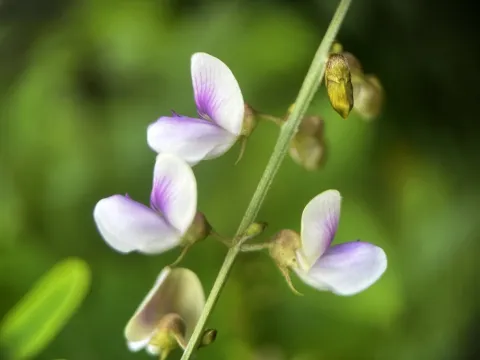
Tephrosia noctiflora
Tephrosia noctiflora
Tephrosia noctiflora is a warm-season legume that requires specific thermal conditions for optimal germination. Sowing is typically aligned with the onset of the rainy season to ensure sufficient moisture for seedling establishment.
What the section contains
Tephrosia noctiflora
Seeds are sown at a depth of 2 to 4 centimeters in well-prepared seedbeds. Pre-sowing treatments, such as seed scarification, are often employed to break dormancy and ensure uniform emergence across the field.
Row spacing should be managed to allow the plant to reach its full vegetative potential. In intercropping systems, the timing of sowing must be synchronized to prevent early competition with primary crops for sunlight.
As a green manure crop, high-density broadcasting is preferred to create a dense canopy. This methodology effectively suppresses weeds and protects the soil surface from the impact of heavy tropical rains.
Proper timing is critical in regions with short growing seasons to ensure maximum biomass accumulation before plant maturity. Delayed planting often results in stunted growth and lower nitrogen-fixing efficiency.
Belonging to the Fabaceae family, Tephrosia noctiflora is highly valued for its ability to thrive in poor soils. It establishes symbiotic relationships with Rhizobium bacteria, facilitating nitrogen fixation.
The plant performs best in well-drained sandy or loamy soils. It is notably intolerant of waterlogging, which can cause root rot and significantly hinder plant development and productivity.
As a heliophyte, it requires full sunlight to optimize photosynthetic activity. Shaded conditions lead to weak stems and a drastic reduction in biomass production compared to open field cultivation.
Tephrosia noctiflora is renowned for its excellent drought tolerance. It is well-adapted to environments with irregular rainfall patterns, maintaining its vitality where other crops would suffer from moisture stress.
The ideal soil pH ranges from slightly acidic to neutral. Its deep root system also helps in breaking up compacted soil layers, contributing to better aeration and water infiltration in the field.
Biomass production is the primary harvest objective for Tephrosia noctiflora when used as a cover crop. Frequent cutting before flowering can extend the vegetative life of the stand.
Seed production requires careful monitoring, as the pods tend to shatter upon maturity. Harvesting should be performed just before the pods reach total dryness to maximize yield quality and quantity.
While the plant is sometimes used as fodder, caution is necessary due to secondary metabolites present in the leaves. Livestock should only be fed restricted amounts to ensure overall nutritional safety.
In organic farming, the incorporation of the green biomass into the soil significantly boosts nitrogen levels and improves overall soil organic matter content. This serves as a sustainable fertility management strategy.
Regular harvesting of biomass for compost or mulch can support soil health over multiple years. The plant's ability to regenerate after cutting allows for multiple harvests in a single season under good rainfall.
The primary threats to Tephrosia noctiflora include soil-borne pathogens such as nematodes that target the root nodules. Healthy crop rotation is the most effective way to minimize these risks.
Aphids and various defoliating insects can pose challenges during the active growth phase. Integrated pest management practices are recommended to keep populations below the economic injury level.
Fungal leaf spots may occur during periods of high humidity and poor air circulation. Selecting planting densities that promote airflow can help mitigate these common fungal issues.
Weed management is most critical during the first month of the growth cycle. Once the canopy closes, the plant is usually capable of outcompeting most weed species effectively.
Viral infections, often vectored by insect populations, can affect plant vigor. Removing symptomatic plants immediately helps limit the spread of the virus throughout the field.