
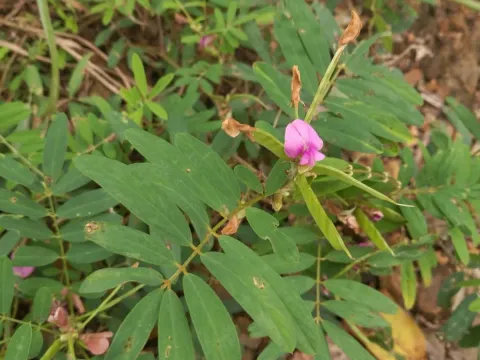
Tephrosia pedicellata
Tephrosia pedicellata
Tephrosia pedicellata is a notable member of the Fabaceae family, valued for its ability to thrive in various tropical and subtropical soil conditions. It acts as an effective nitrogen-fixing plant, contributing significantly to soil health and fertility management.
What the section contains
Tephrosia pedicellata
The crop prefers well-drained soils and thrives in environments where sunlight is abundant. While it shows resilience in less fertile soils, its optimal growth is achieved in well-aerated substrates with a balanced pH level between 6.0 and 7.5.
Temperature requirements remain consistent with tropical standards, requiring warm weather for germination and vegetative growth. It shows high adaptation to seasonal changes, often persisting through moderate dry spells due to its efficient water-use strategy.
Farmers use this plant for soil conservation purposes, particularly as a green manure crop. Its extensive root system helps prevent soil erosion and improves the overall physical structure of the ground, preparing it for subsequent high-value crops.
Proper land preparation is essential for maximizing yield. This includes removing competing weeds during the early developmental stages, which allows the seedlings to establish a strong root network without competition for nutrients.
The crop is susceptible to certain lepidopteran pests, which can cause significant defoliation if left unmonitored. Early detection through regular field scouting is critical for implementing necessary control measures before extensive damage occurs.
Fungal pathogens such as Fusarium and Rhizoctonia pose risks, particularly in fields with poor drainage or high moisture accumulation. These pathogens typically attack the root system, causing plant wilting and reduced biomass production.
Powdery mildew may occur in conditions of high humidity and poor airflow. Managing plant density and ensuring proper spacing between rows are effective cultural practices to mitigate the spread of such diseases.
Root-knot nematodes can impact the growth of leguminous crops in infested soils. Utilizing crop rotation schemes that include non-host plants is a recommended strategy to reduce nematode populations in the field.
Comprehensive disease management should prioritize a preventative approach, including the use of treated seeds and maintaining optimal environmental conditions that do not favor the development of opportunistic pathogens.