
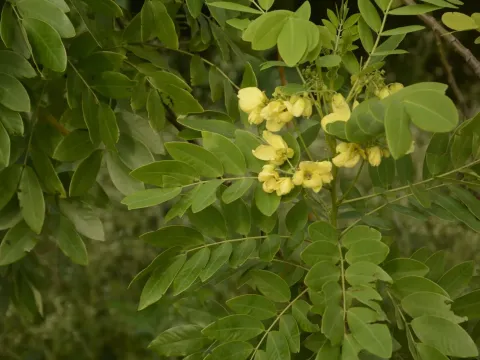
Senna sulfurea
Senna sulfurea
Senna sulfurea is an ornamental shrub belonging to the Fabaceae family, native to tropical regions of Asia. It is widely recognized for its bright, sulfur-yellow flowers and rapid growth habit, making it a popular choice for warm-climate landscape projects.
What the section contains
Senna sulfurea
The cultivation of this plant requires full sun exposure to ensure vigorous growth and optimal flowering. In shaded conditions, the plant tends to become leggy, losing its compact shape and reducing its overall aesthetic appeal in garden settings.
The ideal soil for Senna sulfurea is well-draining, fertile, and slightly acidic to neutral. Proper drainage is critical; the root system is susceptible to decay if exposed to waterlogged conditions, making soil preparation a priority before planting.
Regarding climate, the plant thrives in tropical and subtropical temperatures. It is frost-tender and should be protected from temperatures below freezing. In cooler zones, it is typically managed as an ornamental pot plant brought indoors during winter months.
The primary use of this crop is landscaping and ornamental horticulture. It is frequently employed as an accent shrub or for creating informal hedge borders, appreciated for its hardiness once established and its long-lasting, vibrant yellow floral displays.
Spider mites are common pests that thrive on Senna sulfurea during hot and dry weather conditions. They feed on the underside of leaves, often causing chlorosis and premature defoliation if left untreated for extended periods.
Fungal leaf spot diseases may develop during periods of high humidity or poor air circulation. These infections manifest as irregular patches on the foliage, which can eventually lead to significant loss of leaf mass if not managed with proper sanitation.
Root rot, often caused by Pythium or Phytophthora species, is a significant threat associated with overwatering or heavy, poorly draining soils. This condition is difficult to treat once advanced, emphasizing the need for preventative soil management.
Aphids frequently colonize the tender young shoots and buds of the plant. Their activity can lead to stunted growth and the spread of viral pathogens, requiring the use of systemic or contact insecticides when population densities rise.
Regular maintenance, including the removal of deadwood and thinning of the canopy, is essential to ensure adequate airflow. A healthy, well-pruned plant is significantly more resilient to the typical biological threats faced by the species.