
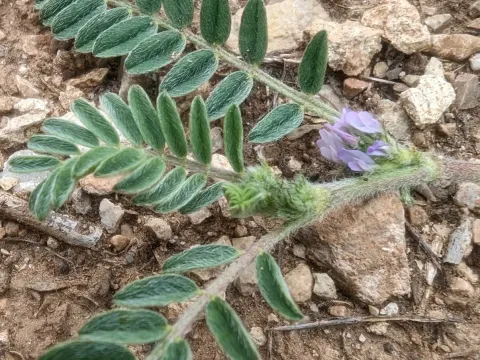
Sesame milkvetch
Astragalus sesameus
Sesame milkvetch (Astragalus sesameus) is a member of the Fabaceae family. This annual herbaceous plant is primarily found in the Mediterranean basin and arid regions of Western Asia.
What the section contains
Sesame milkvetch
The plant grows to a height of 10 to 30 centimeters, featuring procumbent or ascending stems covered with fine hairs. This adaptation helps the species conserve moisture in its native dry habitats.
Its leaves are odd-pinnate, typical for the Astragalus genus. The dense, head-like inflorescences carry flowers that resemble sesame seeds, giving the plant its common name.
As an annual species, it completes its lifecycle within one growing season, allowing for quick biomass production and seed set, which is beneficial for regenerative agriculture practices.
The roots possess the ability to form symbiotic relationships with rhizobia, significantly enhancing the soil nitrogen content after the plant completes its lifecycle.
This crop thrives in well-lit environments and requires full sunlight for optimal growth. It is highly intolerant of waterlogged soil conditions, making drainage a priority.
The ideal soil profile includes sandy or gravelly textures with a neutral to slightly alkaline reaction. It shows impressive performance in poor soils where fertility is limited.
Regarding climate, the plant requires a warm, stable growing season. It is susceptible to extreme frost and prefers environments with moderate humidity levels.
Agrotechnical practices should focus on minimal soil disturbance to preserve the natural soil structure and prevent competition from aggressive weeds during the germination phase.
The plant's resilience makes it a suitable candidate for land reclamation projects and as a secondary crop in dry-land farming systems where irrigation is limited.
Root rot represents the most significant threat to sesame milkvetch, especially when grown in soils with inadequate drainage or during excessively wet seasons.
Insect pests, including various species of weevils and aphids, may affect the vegetative mass during the early spring growth phase, potentially reducing plant vigor.
Fungal diseases like powdery mildew can emerge under conditions of high humidity combined with poor air circulation within the plant canopy.
To mitigate these risks, farmers should avoid overcrowding the plants and ensure that seeding rates are appropriate for the specific soil fertility levels.
Monitoring for signs of infestation is crucial during the budding stage, as this is when the plant is most vulnerable to damage that could affect future seed production.