
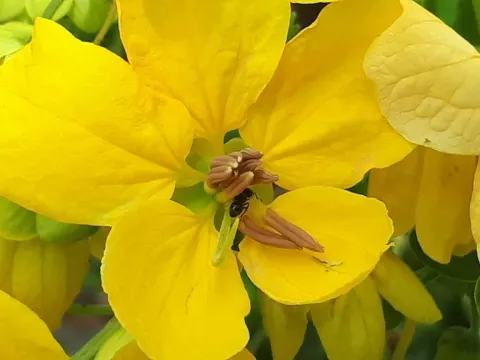
Senna surattensis
Senna surattensis
Propagation of Senna surattensis is primarily achieved through seeds. Sowing should be carried out in spring when soil temperatures consistently reach at least 20 degrees Celsius to ensure rapid and uniform germination.
What the section contains
Senna surattensis
Seeds have a hard seed coat and require scarification prior to planting to increase the water uptake. This simple mechanical procedure significantly improves the success rate of germination.
The seeds should be planted at a depth of approximately 1 to 1.5 centimeters in a loose, well-draining soil medium. Maintaining constant, moderate soil moisture is crucial during the initial three-week period after sowing.
Commercial nurseries often utilize semi-hardwood cuttings for faster development. This vegetative propagation technique ensures that the new plants inherit the exact characteristics of the parent specimen.
Transplanting into the permanent garden site should occur only after the danger of frost has passed. Adequate spacing of at least 1.5 to 2 meters is recommended to allow for healthy air circulation and lateral growth.
Senna surattensis, also known as the scrambled egg tree, is a vibrant evergreen shrub belonging to the Fabaceae family. It is native to tropical regions and thrives best in warm climates without cold stress.
The plant requires full sun exposure to maintain its characteristic blooming cycle throughout the year. It does not tolerate prolonged frost, which can severely damage or kill the shrub in temperate regions.
Regarding soil preferences, the plant is adaptable but performs best in well-drained, fertile loams. Good soil drainage is essential, as waterlogged conditions often lead to root rot and other physiological disorders.
Regular irrigation is necessary during the active growth phase. While the shrub exhibits moderate drought tolerance once established, consistent moisture promotes the most vigorous foliage growth and abundant yellow flowers.
Pruning is a fundamental aspect of the agricultural management of this crop. Regular trimming helps maintain the desired shape, encourages branching, and prevents the plant from becoming leggy or overgrown.
Pest management for Senna surattensis primarily focuses on controlling sap-sucking insects such as aphids and spider mites. These pests thrive in dry conditions and can cause significant damage to tender leaves.
Fungal diseases are another threat, particularly in humid or stagnant air environments. Leaf spot and root rot are the most common issues arising from improper watering or lack of ventilation within the shrub.
Chemical control involving systemic insecticides is effective against persistent infestations. Always apply treatments during the early hours of the day to minimize damage to beneficial pollinators visiting the flowers.
Cultural prevention practices, such as proper spacing and thinning of inner branches, are the most effective ways to manage humidity levels. A well-pruned plant is significantly less susceptible to fungal attacks.
Regular monitoring of the underside of leaves is recommended for early detection of pests. Early intervention often prevents the need for broad-spectrum chemical applications, preserving the plant's natural health.