
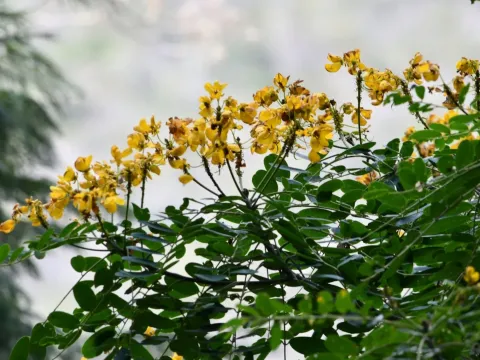
Senna racemosa
Senna racemosa
Sowing Senna racemosa seeds should ideally take place in the spring when soil temperatures consistently reach 20–25 degrees Celsius. The seeds possess a hard coat, so scarification is required to ensure uniform germination.
What the section contains
Senna racemosa
Soaking the seeds in lukewarm water for 24 hours prior to planting is a proven method to increase the success rate. The seeds should be planted at a depth of 1 to 2 centimeters in a well-draining, nutrient-rich substrate.
Transplanting seedlings to their permanent outdoor location should only happen once the threat of frost has passed. Early spring indoor propagation is recommended in cooler regions to allow the plant to establish before summer.
Spacing is a critical factor for Senna racemosa, as the plant can develop a significant canopy. A minimum distance of 2 to 3 meters between individual plants is recommended to facilitate optimal airflow and light penetration.
Prior to sowing, the soil must be prepared with organic matter and sand to ensure optimal texture and fertility. A well-prepared seedbed is the foundation for healthy growth and long-term development of the crop.
Senna racemosa thrives in full sun, requiring exposure to direct sunlight for the majority of the day to maintain its metabolic health. Insufficient light levels will lead to leggy growth and significantly reduced flowering.
The plant is highly adaptable to various soil types but prefers loamy or sandy soils with a neutral pH. The most critical requirement is excellent drainage, as the species is highly susceptible to root damage in waterlogged conditions.
Temperature management is essential for this tropical crop, which prefers warm environments between 22 and 32 degrees Celsius. Extreme cold or sustained temperatures below 10 degrees will cause growth stagnation and potential tissue damage.
Consistent, moderate irrigation is required throughout the growing season, particularly during the flowering phase. However, producers must avoid standing water to prevent the development of root rot diseases.
Balanced NPK fertilizers should be applied at the start of the growing cycle, followed by phosphorous-heavy feeds as the plants prepare to enter their flowering stage to maximize yield.
The primary threats to Senna racemosa include fungal infections such as powdery mildew, which thrive in humid and poorly ventilated conditions. Prevention focuses on maintaining space between plants and ensuring proper soil drainage.
Pests, particularly aphids and spider mites, are common in drier climates. These insects target new growth, and heavy infestations can lead to leaf yellowing and stunted development of the entire plant.
Root rot, typically caused by phytophthora or pythium species, remains the most significant threat for crops grown in heavy clay soils. Using sterilized soil and avoiding over-irrigation are the most effective management strategies.
Leaf-eating caterpillars can sporadically damage the foliage, reducing the overall photosynthetic capacity of the plant. Biological controls or targeted insecticide applications are often required to manage these outbreaks.
Regular monitoring of the foliage and root zone is essential for professional crop management. Early detection of any stress symptoms allows for quick intervention, which is necessary to maintain high production standards.