
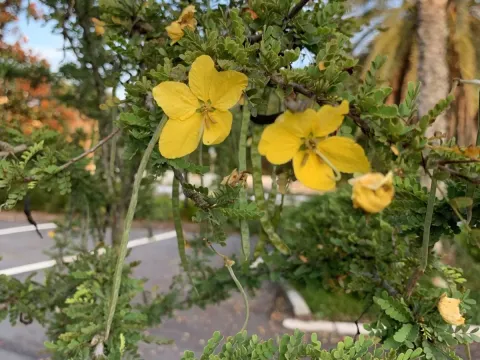
Senna polyphylla
Senna polyphylla
Senna polyphylla is a hardy evergreen shrub or small tree belonging to the Fabaceae (legume) family. Native to the tropical regions, specifically the Caribbean islands, this plant is well-adapted to high-temperature environments.
What the section contains
Senna polyphylla
The plant thrives in full sun, which is critical for its vigorous development and the production of secondary metabolites. It does not tolerate frost and must be grown in frost-free regions to survive and flourish throughout the year.
Regarding soil requirements, Senna polyphylla prefers well-drained, sandy or loamy substrates. It is relatively adaptable, but it performs best in soils with neutral to slightly acidic pH levels that prevent the roots from becoming waterlogged.
While the species is naturally adapted to periods of low rainfall, commercial cultivation requires controlled irrigation during the growth phase to optimize the yield of leaf biomass. Drought stress can limit foliage production.
Propagation is typically achieved through seeds or stem cuttings. Seed germination can be improved by scarifying the seed coat, which is a standard horticultural practice for many hard-seeded legumes to ensure uniform emergence.
The primary economic value of Senna polyphylla lies in its pharmaceutical potential. The leaves and fruits are harvested for their therapeutic compounds, including various glycosides that have medicinal applications.
Harvesting is usually timed to coincide with the pre-flowering stage, as this is when the concentration of the target chemical compounds is highest within the plant tissues. Mechanical or manual pruning is utilized to collect the foliage.
Yield metrics depend on planting density and the intensity of nutrient management. While Senna polyphylla is not always grown as a staple crop, specialized farms can achieve sustainable output through careful pruning and organic fertilization practices.
Beyond pharmaceutical use, the plant is valued as an ornamental species. Its pinnate leaves and vibrant yellow flowers make it an excellent choice for landscaping in tropical urban environments, where it serves as a decorative focal point.
Proper post-harvest processing is essential to maintain the quality of the raw material. The leaves must be dried in controlled conditions away from direct sunlight to preserve the chemical integrity of the active ingredients.
Common pests affecting Senna polyphylla include aphids and spider mites, particularly in hot, dry conditions. These pests cause damage to young shoots, leading to stunted growth if left unmanaged.
Root rot caused by fungal pathogens is a significant threat when soil drainage is insufficient. Overwatering is the most common cause of root disease, making it vital to monitor soil moisture levels closely.
Powdery mildew can occur on the foliage when plant density is too high, leading to stagnant air. To prevent this, plantations should be organized to allow adequate airflow and sunlight penetration between individual shrubs.
Integrated Pest Management (IPM) is recommended for this crop. Because the plant is often processed for medicinal use, the application of chemical pesticides should be strictly minimized in favor of biological control methods.
Regular monitoring of the plantations is essential to detect pest activity early. Removing infected leaves and maintaining plant vigor through appropriate fertilization helps the shrubs withstand environmental stressors and pest pressure.