
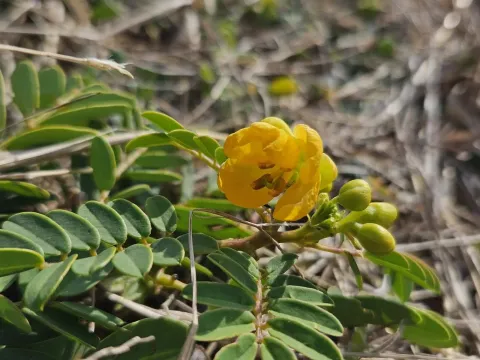
Senna sophera
Senna sophera
Senna sophera is a perennial shrub belonging to the Fabaceae family, commonly found in tropical and subtropical regions across the globe. This plant is known for its versatility and is often cultivated in warm climates where frost is non-existent throughout the year.
What the section contains
Senna sophera
Regarding soil requirements, it thrives in well-drained, sandy-loam soils with a neutral pH level. While it is hardy and can withstand moderate soil degradation, optimal development is achieved when the soil is rich in organic matter and receives adequate irrigation during the dry season.
Climate needs are strictly tropical, requiring full sun exposure and temperatures consistently above 20 degrees Celsius. The plant is drought-tolerant, but high humidity levels during the flowering phase can significantly influence the yield of seed pods.
Agriculture of Senna sophera involves standard leguminous crop management, focusing on spacing to allow adequate airflow, which prevents the development of fungal diseases. It is a nitrogen-fixing plant, which naturally improves soil fertility for subsequent crop rotations.
The morphology consists of compound pinnate leaves and vibrant yellow flowers. The plant's botanical structure allows for efficient photosynthesis, enabling rapid biomass accumulation, which is highly beneficial for both soil stabilization and industrial extraction purposes.
Common threats to Senna sophera include fungal pathogens like leaf spot and root rot, especially in fields with poor drainage or excessive water accumulation during the rainy season.
Pest pressure often comes from aphids and various types of beetles that infest the foliage, potentially leading to stunted growth if not managed through integrated pest control.
Weed control is critical during the seedling stage, as young Senna plants are poor competitors for sunlight and nutrients against invasive grasses and fast-growing weeds.
To maintain plantation health, agronomists recommend systematic scouting and the removal of infected plant residues to break the life cycle of common pathogens.
Environmental stress, such as extreme salinity or prolonged waterlogging, acts as a secondary threat that weakens the plant's natural resistance to pests and diseases.