
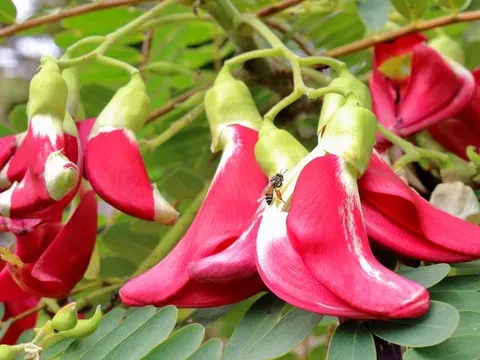
Sesbania
Sesbania
Sesbania is typically sown when soil temperatures consistently reach 18–20°C, usually in late spring, as it is highly sensitive to cold conditions.
What the section contains


Sesbania
The seeds possess a hard coat, requiring scarification or soaking in warm water before sowing to ensure uniform and rapid germination rates.
Seeding rates generally range from 20 to 50 kg per hectare, depending on whether the primary goal is green manure production or seed multiplication.
The optimal planting depth is between 2 and 4 cm, ensuring that the seeds have sufficient moisture contact for early development after emergence.
Row spacing is usually adjusted to 30–45 cm to allow the plants enough room to develop their biomass and maximize sunlight exposure during the season.
Sesbania belongs to the Fabaceae family and thrives in tropical and subtropical regions where warm, sunny days are prevalent throughout the growing season.
One of its standout features is its extreme tolerance to waterlogged soils and occasional flooding, making it highly suitable for lowland areas.
The plant is remarkably adaptable to various soil types, including heavy clays and saline soils, where it serves as a valuable tool for reclamation.
While it prefers neutral to slightly alkaline pH levels, Sesbania remains robust across a broad spectrum of environmental conditions and soil qualities.
Sufficient moisture is essential during the initial stages of growth; however, once established, the crop is relatively efficient in its water usage.
Sesbania is highly valued for its rapid growth rate, capable of producing massive amounts of organic biomass in a relatively short period of time.
Yields of fresh green manure can reach 40–60 tonnes per hectare, providing significant nitrogen inputs and organic matter back to the soil structure.
The plant forms an effective symbiotic relationship with nitrogen-fixing bacteria, significantly improving the fertility of the field for subsequent crops.
Seed production yields generally vary between 1 and 2.5 tonnes per hectare depending on the soil fertility levels and the agricultural practices employed.
Incorporating Sesbania into a rotation strategy serves as an effective biological fertilizer, often eliminating the need for synthetic nitrogen inputs.
Seedlings can be susceptible to fungal diseases during periods of extreme humidity, which necessitates adequate drainage in the planting area.
Common agricultural pests such as aphids and various larvae can damage the foliage, potentially hindering the plant's photosynthetic capacity.
Root-knot nematodes may present a challenge in certain regions, particularly if the crop is planted repeatedly in the same soil without rotation.
Effective management includes maintaining crop rotation schedules and using treated seeds to prevent the introduction of pathogens early in the cycle.
Monitoring the field for pest outbreaks during the first few weeks of growth is critical to ensuring a healthy and productive crop stand.
For green manure purposes, the crop should be harvested at the peak of flowering, as this is when the nutrient content is at its highest point.
The green mass is typically chopped and incorporated into the topsoil, allowing for rapid decomposition and nutrient availability for the next season.
If producing seeds, the harvest should occur when pods become dark and brittle, utilizing combines with reduced threshing speeds to prevent damage.
Post-harvest processing requires immediate drying of the seeds to a moisture content of 12% to ensure long-term stability and viability during storage.
Proper cleaning and sorting are necessary to remove contaminants and debris, ensuring high-quality seeds for future agricultural operations.