
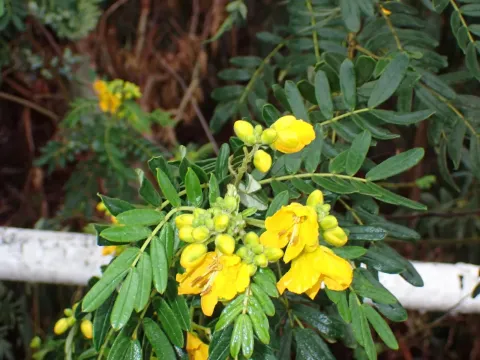
Senna multiglandulosa
Senna multiglandulosa
Sowing of Senna multiglandulosa seeds is typically carried out in spring when soil temperatures reach 18–22°C. Since the seeds have a hard seed coat, scarification or soaking in warm water for 24 hours is essential to ensure high germination rates.
What the section contains
Senna multiglandulosa
In field production, seeds are sown at a depth of 1–2 centimeters. Maintaining a stable temperature is crucial during the early stages of growth, as seedlings are sensitive to sudden thermal fluctuations.
Pre-chilling or stratifying seeds for several weeks in a cool environment can significantly enhance emergence consistency. Planting density is adjusted based on the intended use of the crop, whether for medicinal extract or decorative landscaping.
In regions with short growing seasons, starting the plants in greenhouses is recommended. Transplants should only be moved to open soil once all risks of frost have completely passed.
Germination typically takes between two and four weeks. During this time, the soil must be kept consistently moist but not waterlogged to prevent early-stage seedling damping-off.
Senna multiglandulosa, a member of the Fabaceae family, thrives in sunny locations with full solar exposure. It is well-adapted to arid conditions and prefers well-drained, sandy, or light loam soils with a neutral pH.
Waterlogging must be avoided at all costs, as the root system is highly susceptible to decay in stagnant water. Providing excellent drainage through soil amendments or raised beds is a standard agricultural practice for this species.
The optimal growth temperature ranges from 20°C to 28°C. While the plant is drought-tolerant once established, it is not frost-hardy and requires protection in areas where temperatures drop below freezing.
Like many legumes, it forms a symbiotic relationship with nitrogen-fixing bacteria, reducing the need for high nitrogen fertilizer inputs. However, a balanced application of phosphorus and potassium promotes superior flowering and seed set.
Irrigation should be managed carefully; the plant survives temporary dry spells better than excessive humidity. Periodic cultivation between rows helps improve soil aeration and prevents crusting.
The harvesting of Senna multiglandulosa foliage is conducted during the peak flowering stage or early fruit development. This is the period when the concentration of secondary metabolites in the leaves is at its highest.
Leaves and succulent stems are harvested carefully using hand tools or mechanized harvesting equipment. Care is taken to ensure that the harvesting process does not cause permanent damage to the primary root structure of the shrubs.
Once collected, the material must be dried quickly at temperatures between 40°C and 50°C. Utilizing forced-air dryers in shaded conditions is critical to preserving the integrity of the chemical constituents and preventing oxidation.
Post-drying, the crop is sorted to remove debris and discolored leaves. A high-quality final product should be brittle, retain its natural green color, and exhibit a clean, characteristic herbal aroma.
Storage is performed in airtight containers in a cool, dark, and dry environment. Under these conditions, the shelf life of the harvested material can extend up to two years without significant loss of efficacy.