
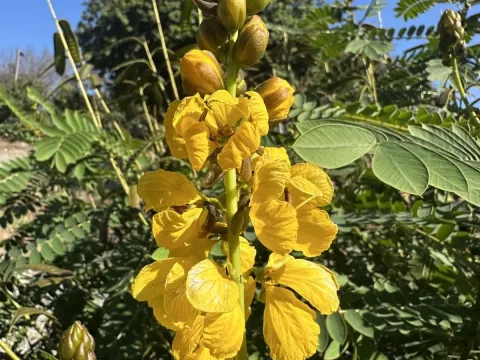
Senna didymobotrya
Senna didymobotrya
Senna didymobotrya is a tropical shrub that requires specific conditions for successful propagation. In temperate climates, it is typically grown as an annual or a container plant, with sowing conducted in spring once the soil temperature is consistently around 20–22 degrees Celsius.
What the section contains
Senna didymobotrya
Seed preparation is crucial due to the hard seed coat, which requires scarification to ensure uniform germination. Soaking seeds in warm water for 24 hours significantly improves the germination rate compared to sowing dry seeds directly into the substrate.
In tropical environments, seeds are planted directly in the soil at the start of the rainy season. When growing in containers, a light, well-draining potting mix is necessary to prevent waterlogging, which is a major risk for young seedlings during their early establishment phase.
Providing adequate spacing is essential as the plant grows rapidly and develops a sprawling, multi-stemmed habit. A minimum distance of 1 to 1.5 meters between individual plants is recommended to ensure each specimen receives sufficient light for optimal development.
Cuttings can also be used for propagation during the summer months, providing a faster alternative to seed-grown plants. The use of rooting hormones significantly enhances the success rate when dealing with semi-hardwood cuttings.
As a member of the Fabaceae family, this plant thrives in locations with abundant sunlight. It prefers open areas protected from strong, drying winds, which can damage the large, pinnate foliage and the distinctive, candle-like flower spikes.
The ideal soil is fertile, loamy, and has a neutral to slightly acidic pH. Proper drainage is the most critical soil requirement, as the root system is highly susceptible to rot if exposed to saturated conditions for extended periods.
The plant requires a warm climate with temperatures generally between 20 and 30 degrees Celsius. It is not frost-tolerant, and temperatures dropping below 5 degrees Celsius will cause growth to stagnate, while freezing conditions will result in the death of the above-ground parts.
Regular irrigation is needed during the active growing season, although established plants can tolerate occasional short-term drought. Balanced mineral fertilization applied twice monthly helps to support both rapid biomass production and vibrant flower formation.
Consistent pruning is necessary for agricultural and ornamental management. Regular shaping prevents the plant from becoming leggy and encourages denser branching, which ultimately leads to a higher concentration of flower spikes and better overall vigor.
In terms of economic use, Senna didymobotrya is valued primarily for its biomass production, often used as green manure. It plays an important role in nitrogen fixation, which naturally enriches the soil and improves productivity for subsequent crops in a rotation cycle.
The seeds and leaves contain secondary metabolites that make the plant of interest to the pharmaceutical and chemical industries. Yield in this context is highly dependent on the plant’s health and the availability of pollinators during the flowering stage.
In tropical agricultural systems, the plant is harvested for its fast-growing foliage, which acts as a soil conditioner. High yields of biomass are possible when the plant is grown in fertile soil with a regular supply of water and adequate solar exposure.
Harvesting for medicinal or scientific purposes requires selective pruning. It is vital to remove only a portion of the total foliage to ensure the plant maintains enough metabolic capacity to continue its development and recover for subsequent harvests.
Consistent yield output depends on meeting the plant's high light demands. Any significant shading or water stress will lead to reduced metabolic activity, slower growth rates, and a corresponding drop in the quantity of harvestable plant material.
The primary health risk for this species is root rot, usually caused by over-irrigation or poorly drained soil. Maintaining appropriate soil moisture levels and ensuring excellent air circulation around the root zone are essential preventive measures.
Common pests include spider mites and aphids, which frequently infest the plant during hot, dry weather. These pests feed on the underside of the leaves, weakening the plant and reducing its overall growth potential and aesthetic value.
Leaf-chewing caterpillars can cause localized damage to the foliage. Monitoring the plant regularly for early signs of infestation is recommended, allowing for the use of targeted biological controls before the damage becomes extensive.
Powdery mildew may appear in greenhouse environments with inadequate ventilation and high humidity. Improving airflow and maintaining proper spacing between plants are the most effective ways to prevent the spread of fungal pathogens.
Biosecurity is a key component of disease management, especially when importing plant material. Keeping equipment clean and isolating new plants before introducing them to the main production area helps protect the crop from unwanted pathogens.