
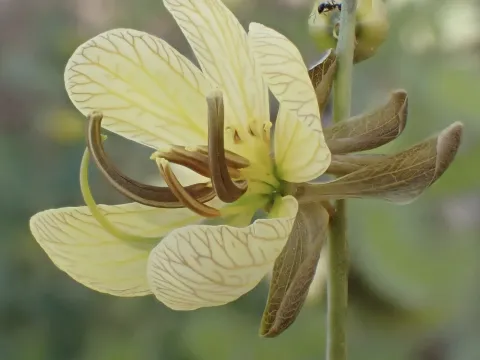
Senna italica
Senna italica
Senna italica is a heat-loving leguminous plant that thrives when sown in well-warmed soil during the late spring months once the threat of frost is over.
What the section contains
Senna italica
Before sowing, it is highly recommended to scarify the seeds to breach their tough outer coat, which significantly improves the germination rate in soil.
Seeds should be planted at a shallow depth of approximately 2 to 3 centimeters, ensuring they have sufficient soil-to-seed contact for proper moisture uptake.
In large-scale farming, row spacing is kept around 60 centimeters to provide each plant with enough room for vegetative development and adequate sunlight exposure.
Consistent, moderate soil moisture is crucial during the germination phase to ensure a strong and uniform stand of the crop across the plantation.
As a member of the Fabaceae family, this plant requires full sun exposure and performs best in open fields with minimal competition from other vegetation.
The ideal soil profile for Senna italica consists of sandy or sandy-loam textures that possess excellent drainage qualities to prevent root rot issues.
Although it is remarkably drought-tolerant, the plant benefits from timely irrigation, particularly during the peak of its vegetative growth period.
The soil pH should ideally remain near neutral or slightly alkaline, as extremely acidic conditions can inhibit nutrient uptake and overall biomass production.
Avoiding waterlogged areas is essential, as the species is highly sensitive to root hypoxia, which can occur in heavy, poorly drained clay soils.
Achieving a high yield requires strict adherence to good agricultural practices, including effective weed control and optimized nutrient management plans.
The economic value is primarily found in the leaves and pods, which contain high concentrations of sennosides, compounds widely used in the pharmaceutical industry.
Harvesting for maximum yield should be precisely timed during the flowering phase, when the chemical concentration in the leaves reaches its peak.
Productivity can be significantly improved by implementing regular inter-row cultivation to maintain soil aeration and reduce water loss through evaporation.
Proper fertilization, focusing on balanced NPK levels, ensures the crop reaches its full potential in terms of both dry leaf weight and chemical potency.
The crop is vulnerable to various fungal diseases that thrive in high humidity conditions, often leading to leaf spotting and diminished plant health.
Insect pests, particularly leaf-chewing caterpillars and aphids, pose a constant threat to the yield, requiring proactive monitoring and management.
Poor drainage is a major threat that can lead to rapid onset of root decay, which is often difficult to reverse once the disease is established.
Integrated pest management strategies are advised to keep populations of harmful insects under control without negatively impacting the quality of the raw material.
- Root rot caused by stagnant water
- Aphid infestations affecting young shoots
- Fungal pathogens causing leaf necrosis
Harvesting involves cutting the aerial parts of the plant, ideally performed during dry weather to prevent the collected material from developing mold during drying.
The drying process is a critical step; it must occur in a well-ventilated, shaded environment to preserve the essential medicinal compounds within the foliage.
Direct exposure to sunlight during the drying phase should be strictly avoided to prevent the degradation of heat-sensitive active components in the leaves.
Once dried, the leaves are separated from the stems and cleaned of any impurities to meet the quality standards required by pharmaceutical processors.
Final storage conditions must involve cool, dry, and dark environments to maintain the stability and pharmacological activity of the Senna italica harvest.