
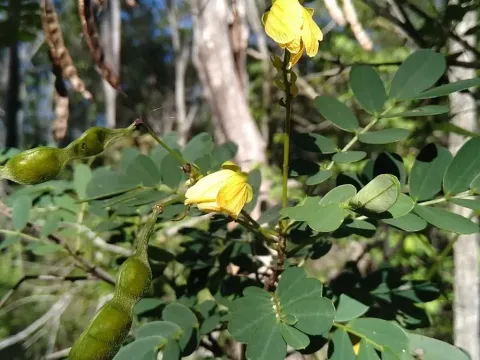
Senna gaudichaudii
Senna gaudichaudii
Senna gaudichaudii is a perennial shrub belonging to the Fabaceae family. This species is native to the Pacific islands, particularly the Hawaiian archipelago, where it thrives in diverse ecological niches ranging from dry forests to coastal slopes.
What the section contains
Senna gaudichaudii
The plant is characterized by its pinnate leaves and vibrant yellow flowers. As a legume, it has the capacity for nitrogen fixation, which contributes to the fertility of the surrounding soil in its natural habitat.
Regarding climatic requirements, the plant demands significant light exposure. It is highly sensitive to cold and frost, meaning successful cultivation is limited to frost-free tropical or subtropical zones with distinct dry and wet seasons.
Soil quality is paramount; Senna gaudichaudii requires well-drained, porous substrates. It performs best in rocky or volcanic soils that prevent waterlogging, a condition that the species is evolutionary adapted to avoid.
Effective management includes maintaining a specific plant density to ensure adequate airflow. Pruning is essential for maintaining a healthy structure and promoting regular flowering, which is the key decorative and biological feature of the species.
The primary threats to Senna gaudichaudii include fungal pathogens that develop during humid weather conditions. Leaf spot diseases are the most common issue, often caused by stagnant air within the dense foliage.
Insect pests such as aphids and scale insects are frequently encountered on the tender stems of the plant. These pests feed on the sap and can weaken the shrub, especially in younger stages of development.
Root rot represents a significant threat when the plant is grown in heavy or poorly drained soils. Once the root system is compromised by anaerobic conditions, the plant becomes highly susceptible to opportunistic soil-borne pathogens.
Integrated pest management (IPM) strategies, including the introduction of natural predators like ladybugs, are recommended to control aphid populations without chemical interference.
To prevent disease outbreaks, cultivators must ensure proper spacing between shrubs and avoid overhead irrigation. Maintaining dry, clean growing conditions is the best defense against most common pathogenic threats.