
Senna barclayana
Senna barclayana
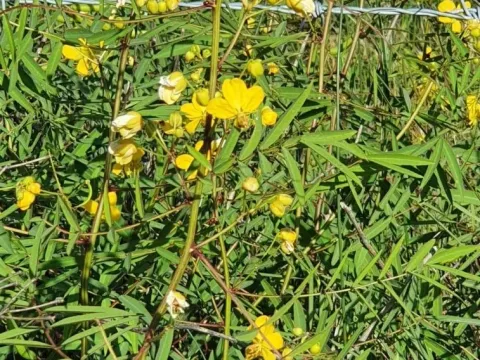
Senna barclayana is a perennial plant belonging to the Fabaceae family, native to the arid regions of Australia. It is characterized by its resilience to harsh environmental conditions and specific morphological adaptations typical of the genus Senna.
What the section contains
Senna barclayana
Botanically, the plant features pinnate leaves and vibrant yellow flowers. Its root system is structured to penetrate deep into the substrate, allowing the plant to sustain itself in nutrient-poor and moisture-deficient soils.
The culture thrives in well-drained, sandy, or light-textured soils. It is highly sensitive to waterlogging, which can cause root decay and subsequent plant mortality, making proper soil site selection the most critical factor for success.
This species requires high levels of solar radiation and warm temperatures to complete its growth cycle. It is not cold-hardy, and frost events can cause terminal damage to the foliage and stems of the plant.
Agricultural management should prioritize soil preparation to ensure optimal drainage. Furthermore, because seedlings develop slowly, early-stage weed control is essential to minimize competition for sunlight and nutrients.
Root rot, driven by moisture accumulation in the root zone, represents the primary threat to the stability and productivity of Senna barclayana plantations. Proper irrigation management is vital to avoid these conditions.
Pests such as leaf-eating caterpillars and aphids pose a recurring risk to plant health. Aphids, in particular, can act as vectors for various plant viruses that inhibit growth and reduce the overall crop yield.
Preventive strategies involve maintaining proper plant spacing to improve airflow, which lowers the humidity levels around the foliage and discourages fungal spore germination.
Regular field scouting is recommended to identify signs of stress or pest infestation early. Integrated pest management (IPM) practices are encouraged to ensure sustainable development of the crop.
Nutrient management must be balanced, as excess nitrogen can lead to rapid, succulent growth that is more attractive to chewing insects and prone to mechanical breakage in arid winds.