
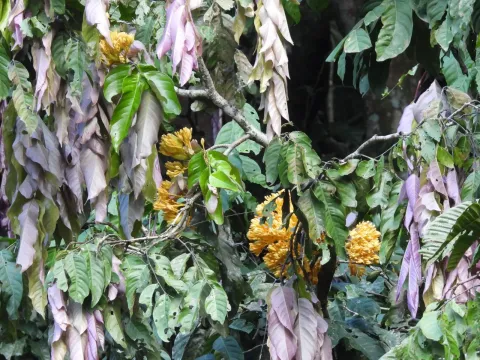
Saraca thaipingensis
Saraca thaipingensis
Saraca thaipingensis is a magnificent evergreen tree belonging to the Fabaceae family. Native to tropical regions of Southeast Asia, it is highly valued for its dense, dark green foliage and spectacular, bright yellow, fragrant inflorescences that appear directly on the stems.
What the section contains
Saraca thaipingensis
To successfully cultivate this species, one must provide a tropical climate with high humidity and consistent warmth. The tree is not frost-tolerant and requires temperatures generally staying above 20 degrees Celsius throughout the year to maintain vigorous growth.
The soil requirements involve a rich, well-draining substrate with a slightly acidic pH. The tree thrives in environments similar to riverbanks or shaded forest edges where the soil is moist but never waterlogged, ensuring healthy root respiration.
In terms of light, Saraca thaipingensis prefers partial shade or dappled light conditions. While it can tolerate some sun, excessive direct heat can stress the tree, leading to leaf burn, especially in younger specimens that are not yet fully established.
Watering is a crucial aspect of its care. Consistent moisture is necessary, and during the dry season, supplemental irrigation is mandatory. Maintaining high atmospheric humidity also promotes the formation of its iconic large flower clusters.
Fungal diseases represent a significant threat to the health of this tree, especially in areas with poor airflow and excessive moisture. Proper spacing and crown thinning are recommended to minimize the development of mold and blight.
Pest management should focus on monitoring for sap-sucking insects like spider mites and mealybugs. If an infestation occurs, horticultural oils or systemic insecticides are usually effective in controlling the population.
Nutrient deficiencies often manifest as chlorosis or stunted growth. Using a balanced, slow-release fertilizer rich in micronutrients helps support the tree's vigorous metabolism and ensures healthy foliage color.
Root rot is the most common killer of this species, usually caused by poor drainage or overwatering. Using gravel or coarse sand in the planting hole can improve drainage and prevent standing water around the roots.
Environmental stress from sudden temperature changes or high winds can cause leaf drop. Providing a windbreak or a sheltered location is highly beneficial for protecting the delicate flower buds from falling prematurely.