
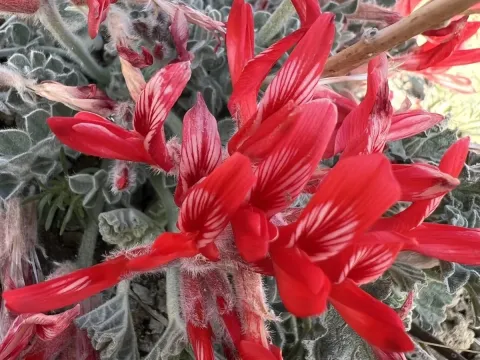
Scarlet milkvetch
Astragalus coccineus
The scarlet milkvetch (Astragalus coccineus) is a perennial member of the legume family (Fabaceae). It is native to the arid desert regions of the southwestern United States and northwestern Mexico, where it thrives in harsh environments.
What the section contains
Scarlet milkvetch
This species requires full sun exposure to flourish. It is a highly heliophilic plant that demands high light intensity to maintain its characteristic compact habit and vibrant floral display throughout the growing season.
In terms of soil, the scarlet milkvetch is strictly adapted to well-draining, rocky, or sandy substrates. It cannot tolerate moisture-retentive, heavy soils, as poor aeration almost inevitably leads to root decay.
The plant is exceptionally drought-tolerant and well-adapted to extreme temperature fluctuations. Its physiological structure, including densely hairy foliage, serves as a natural defense mechanism against water loss and heat stress.
As a legume, it contributes to nitrogen fixation, though its primary agricultural value in current landscapes is largely centered on its use as a resilient, ornamental groundcover in xeriscaping projects.
Root rot remains the primary threat to this species. It is almost exclusively caused by improper irrigation practices or poor soil drainage, which create anaerobic conditions that kill the roots.
Powdery mildew is a common foliage disease that may appear in stagnant, humid environments. Maintaining adequate spacing between individual plants is essential to allow for necessary air circulation.
Insect pests, including various beetles and lepidopteran larvae, can occasionally damage the foliage or developing seeds. Integrated pest management strategies are advised if damage thresholds are exceeded.
Mechanical damage during weeding can also expose the plant to opportunistic pathogens, so caution should be exercised when maintaining the area around the base of the plant.
The overall resilience of the plant is high, provided that the artificial environment closely mimics its native desert conditions, emphasizing dryness and excellent drainage.