
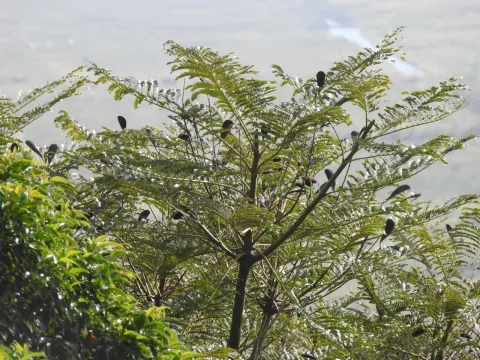
Schizolobium
Schizolobium
The sowing of Schizolobium seeds is typically performed in managed nurseries using a lightweight, well-draining substrate. Due to the hard seed coat, scarification is required to ensure uniform germination rates.
What the section contains

Schizolobium
In its native tropical range, the ideal sowing time coincides with the start of the rainy season, which provides the young seedlings with sufficient moisture for rapid root establishment.
Seedlings are ready for transplanting into the field once they reach a height of approximately 40 to 60 centimeters. Careful spacing is essential, as the species requires significant room to develop its large, spreading crown.
Protection from intense direct sunlight is necessary during the first few weeks after field planting to prevent heat stress and dehydration in the delicate juvenile stage.
Large-scale production requires a well-structured irrigation system to maintain optimal soil moisture levels during the early growth phases, ensuring the tree reaches its high growth potential.
Schizolobium is a member of the Fabaceae family and is renowned globally as one of the fastest-growing tree species, native to the tropical forests of the Americas.
The tree thrives in deep, fertile, and well-drained soils. It exhibits low tolerance for waterlogged conditions, which can lead to rapid root decay and stunted growth.
As a tropical species, it requires a warm climate with consistent year-round temperatures, ideally between 22 and 30 degrees Celsius, and is intolerant to frost.
High light intensity is critical for maintaining its rapid growth rate, making open, sun-exposed areas the most suitable sites for plantation establishment.
Consistent precipitation or supplementary irrigation is necessary, as the tree’s metabolic rate is tied closely to the availability of water during the growing season.
Schizolobium is primarily cultivated for its lightweight timber, which is highly sought after for plywood production, furniture components, and packaging materials.
The rapid maturity of the tree, which can be harvested within 7 to 10 years, makes it an economically attractive choice for short-rotation forestry projects.
The wood is prized for its ease of processing and sustainability, serving as an effective ecological alternative to slower-growing hardwood species in various industrial sectors.
Beyond timber, Schizolobium plays a significant role in nitrogen fixation, helping to improve soil fertility and health in mixed-use agroforestry systems.
Due to its massive accumulation of biomass in a short period, the species is also being researched as a potential source for sustainable biofuel production.
Young plants are susceptible to defoliating insects that can significantly reduce photosynthetic capacity during the critical establishment years.
Root rot, often caused by pathogenic fungi associated with poor soil drainage and waterlogging, remains a common issue in poorly managed plantation sites.
Stem borers can cause physical damage to the trunk, lowering the quality of the timber produced and occasionally hindering the structural integrity of the tree.
Implementing strict silvicultural practices, such as clearing debris and monitoring for early pest signs, is essential for maintaining a healthy and productive plantation.
Integrated pest management strategies are recommended to mitigate threats while minimizing the ecological impact of chemical treatments on local biodiversity.