
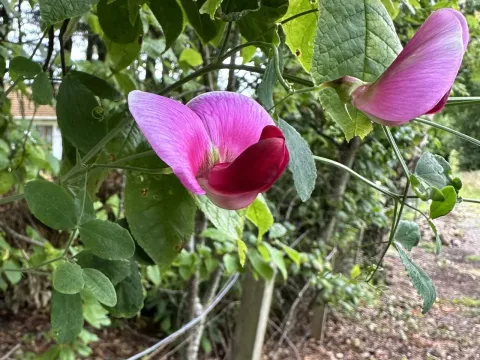
Broad-leaved everlasting pea
Lathyrus grandiflorus
Sowing of Lathyrus grandiflorus typically occurs in the spring, once soil temperatures consistently reach 10-12 degrees Celsius. Late April or early May is generally considered the optimal window for establishing healthy stands in temperate climates.
What the section contains
Broad-leaved everlasting pea
Pre-treatment of seeds is highly recommended to improve germination rates. Soaking the seeds in lukewarm water for 12 to 24 hours helps to soften the hard outer seed coat, allowing the embryo to emerge more effectively upon planting.
Seeds should be sown at a depth of 3 to 5 centimeters, depending on the soil texture. Proper depth ensures the seeds are protected from drying out while remaining close enough to the surface to receive adequate warmth for growth.
In ornamental settings, individual seeds should be spaced 30-40 centimeters apart to provide sufficient room for the sprawling vines to develop. For row cultivation, a spacing of 25 centimeters between seeds is standard to balance plant density.
Seedlings usually emerge within two weeks following planting. Providing consistent moisture during this initial growth phase is critical, though growers must avoid waterlogging the soil, which can inhibit development or lead to fungal issues.
Broad-leaved everlasting pea is a member of the Fabaceae family, prized for its vigorous vining habit and hardiness. Originally from Southern Europe and Turkey, it is well-adapted to Mediterranean-type climates with mild winters and warm, sunny summers.
The crop thrives in fertile, well-draining loam soils with a neutral pH. It is sensitive to waterlogged conditions; therefore, fields with heavy clay content must be amended with organic matter or drainage systems to prevent root rot.
This species is a natural climber, reaching heights of up to 2 meters. It requires structural support, such as trellises, fences, or netting, to achieve its full potential. Without support, the plants will sprawl across the ground, increasing vulnerability to pests.
While the plant is relatively drought-tolerant once established, it requires regular irrigation during its primary growth and flowering phases. Adequate moisture levels are essential to support the rapid biomass production associated with this legume.
Maintenance includes light cultivation of the soil surface to manage weeds and encourage gas exchange at the root zone. Regular monitoring of the nitrogen-fixing nodules on the roots can also provide insight into the plant’s nutritional status.
Powdery mildew is the most significant disease affecting Lathyrus grandiflorus, particularly in humid or stagnant air conditions. Proper plant spacing and avoiding overhead watering are essential cultural practices to mitigate the risk of fungal infection.
Aphids are the primary insect pests that target the soft, growing tips of the vines. If left untreated, severe infestations can stunt growth and cause leaf curling, reducing the plant's overall vigor and aesthetic or agricultural value.
Root rot, often caused by pathogens like Pythium or Phytophthora, represents a major threat in poorly drained soils. Managing soil moisture levels through proper irrigation techniques is the best defense against these underground diseases.
Leaf miners and caterpillars may also feed on the foliage during the summer months. Early detection through regular field inspections is vital, allowing for the use of targeted biological controls rather than broad-spectrum chemical interventions.
Sanitation plays a crucial role in disease prevention. Removing and destroying crop debris at the end of the season prevents the overwintering of pathogens and harmful insect eggs, thereby protecting future harvests from early-stage infections.