
Ptolemaic sainfoin
Onobrychis ptolemaica
Ptolemaic sainfoin (Onobrychis ptolemaica) is a perennial legume belonging to the Fabaceae family. This species is highly specialized, having evolved to thrive in the harsh, arid, and semi-arid landscapes of the Middle East and North Africa.
What the section contains
Ptolemaic sainfoin
The plant acts as an essential component of the desert ecosystem, demonstrating remarkable drought tolerance. It is typically found on rocky slopes and sandy terrains, where it competes successfully for limited hydrological resources.
The environmental requirements for this crop include well-drained, alkaline or calcareous soils. Its deep-reaching root architecture allows the plant to access moisture from subsurface layers that remain unreachable to common annual crops.
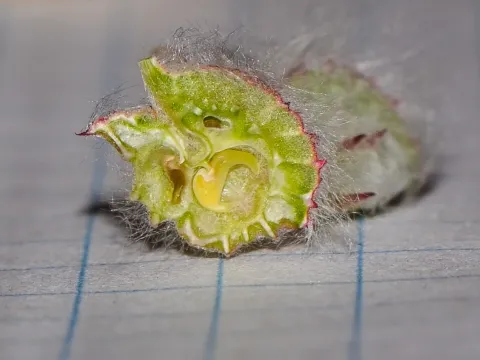
Climatically, it is adapted to high solar radiation levels and significant thermal fluctuations. Its leaves are often pubescent, which serves as a defensive mechanism to minimize transpirational water loss under intense desert heat.
Unlike domesticated sainfoin species, this plant remains dormant during extreme heat stress and re-emerges quickly during the rainy season, maximizing its biomass accumulation within short windows of favorable moisture availability.
Ptolemaic sainfoin is primarily utilized as a grazing resource for livestock, including camels, goats, and sheep. Its nutritional profile, being rich in proteins and essential minerals, makes it an indispensable forage in regions lacking irrigation.
Yield capacity is highly dependent on seasonal precipitation patterns. While it is not intended for high-input industrial agriculture, it provides consistent forage value in grazing systems where input costs must be kept to a minimum.
Beyond its forage utility, the crop contributes significantly to soil health. Its nitrogen-fixing capabilities enrich nutrient-poor desert soils, effectively aiding in land reclamation efforts and preventing soil degradation.
Seed production is an important aspect of its management. Due to the staggered maturation of seeds in the wild, harvesting requires precise timing to maximize the yield of viable pods for potential reseeding projects.
Future agricultural applications may include the use of this species in restoration ecology and sustainable rangeland management, where its robustness ensures the stability of the vegetation cover over long periods of time.