
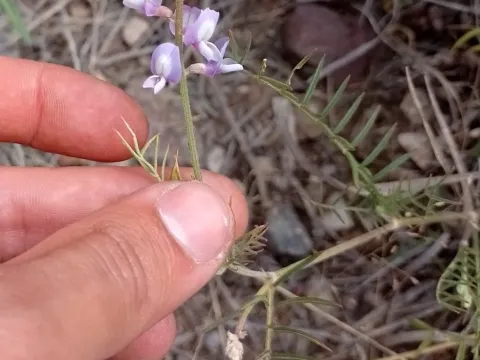
Berg's milkvetch
Astragalus bergii
Sowing Berg's milkvetch is ideally performed in early spring as soon as the soil warms up to 5-8 degrees Celsius. The optimal seeding depth is 2–3 centimeters to ensure proper germination.
What the section contains
Berg's milkvetch
A well-prepared seedbed, free from weeds, is essential for successful establishment, as the crop develops slowly during the first year of growth.
The seeding rate is typically 10–12 kilograms per hectare, depending on seed quality. Ensuring good soil-to-seed contact is critical for maximizing emergence rates in the field.
In arid regions, winter sowing is often preferred to take advantage of soil moisture from melting snow, which helps the plants establish before the onset of summer heat.
When incorporating the species into forage mixtures, the seeding rate should be adjusted based on the growth habits of the other plant species in the stand.
Berg's milkvetch is a perennial legume highly adapted to challenging climatic conditions and poor soil quality, making it a valuable plant for arid and semi-arid regions.
The crop prefers well-drained, calcareous soils and does not tolerate waterlogging, which can cause significant damage to the root system and reduce stand longevity.
It exhibits strong winter hardiness and can survive significant temperature fluctuations, provided there is adequate snow cover or sheltered field conditions.
As a nitrogen-fixing legume, it improves soil fertility through its symbiosis with specific root bacteria, making it an excellent component for sustainable crop rotations.
Full sun is required for optimal biomass production; excessive shading significantly hinders growth and reduces the overall forage quality of the stand.
The biomass yield of Berg's milkvetch is primarily determined by moisture availability during the growing season, although the species is notably drought-tolerant.
Average hay yields typically range from 15–20 centners per hectare, maintaining high nutritional value even when harvested at later vegetative stages.
Peak productivity is generally reached during the second and third years of life, once the root system is fully developed and the stand has become established.
The plant demonstrates excellent regrowth capabilities, allowing for multiple grazing cycles within a single growing season when managed appropriately.
Seed production is consistent and reliable, enabling farmers to maintain their own seed supplies for ongoing field operations without relying on external sources.
Root rot is the most significant threat, especially in areas with poor drainage or during prolonged periods of excessive rainfall, which can lead to stand decline.
Young seedlings may be susceptible to damage from weevils, which can thin the population during the early growth stages before the plants become robust.
While aphids may occasionally appear during dry spells, they rarely cause economic damage, and large-scale control measures are generally not required.
Seed treatment with fungicides before sowing is the most effective preventative measure against soil-borne pathogens that target developing root systems.
- Periodic field scouting for pest activity.
- Adopting proper crop rotation intervals of at least 3-4 years.
- Selecting disease-resistant varieties if available in the region.
The ideal timing for hay harvest is during the full flowering stage, as this ensures the optimal balance between protein content and dry matter yield.
Harvest height management is crucial; cutting too low can deplete the plant's energy reserves and reduce regrowth potential for the following season.
Rapid drying of the cut biomass is necessary to retain the nutrient-rich leaves, which are the most valuable component of the forage for livestock.
Seed harvesting should be timed precisely when the pods turn color to prevent shattering and loss, which is critical for maximizing seed recovery.
Post-harvest management, including minimal soil disturbance, helps maintain stand vigor and productivity for subsequent years of utilization.