
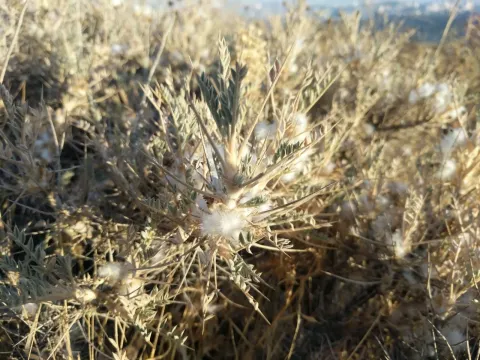
Bethlehem milkvetch
Astragalus bethlehemiticus
Bethlehem milkvetch (Astragalus bethlehemiticus) is a perennial member of the Fabaceae family, adapted to Mediterranean climates. Successful crop establishment begins with high-quality, scarified seeds sown in early spring.
What the section contains
Bethlehem milkvetch
The seeds require a warm, well-prepared seedbed to germinate effectively. Planting depth should be maintained at approximately 1.5 to 2 centimeters to ensure the seedlings have enough energy to emerge through the soil surface.
Due to the slow initial growth rate of the species, proper spacing is crucial to minimize early-stage competition. Farmers should ensure the field is free from perennial weeds before planting the crop.
Row cropping is generally preferred to facilitate mechanical weeding and ensure that the plants receive adequate aeration. This layout also helps in monitoring the crop for any signs of pest activity during the early growth stages.
During the first year, the focus of the plant is on developing a deep taproot system. Farmers should avoid over-disturbing the young seedlings while performing standard field maintenance tasks.
This species thrives in arid and semi-arid environments. It has a high requirement for direct sunlight and performs best when planted in open fields without any shading from nearby structures or trees.
Well-drained, porous soils are essential for the survival of Bethlehem milkvetch. It is particularly well-adapted to limestone-rich, rocky substrates that offer excellent drainage and prevent root rot.
The plant demonstrates remarkable drought resistance once the root system is fully established. It is an ideal candidate for low-input agricultural systems in regions where irrigation water is scarce or unavailable.
Temperature tolerance is moderate, and the plants can survive mild frosts. However, excessively wet winters can prove fatal, as the roots are sensitive to anaerobic conditions caused by waterlogging.
Soil nutrient requirements are generally low, as the plant benefits from symbiotic nitrogen-fixing bacteria associated with its roots. Providing a balanced mineral environment with good calcium levels will support optimal growth.
Weevils are among the most persistent insect threats to this crop, particularly during the flowering and seed-setting phases. Damage to reproductive structures can significantly impact potential seed yields.
Fungal diseases, specifically root rots and wilts, present the greatest risk to the plant's long-term health. These issues are almost always linked to poor drainage or overly frequent irrigation practices.
Foliar fungal pathogens can cause leaf spots during uncharacteristically humid growing seasons. Promoting good air circulation through proper plant spacing is the most effective preventative strategy against such infections.
Aphid infestations may occur in dense stands or under nutrient-stressed conditions. Regular field scouting is necessary to determine if biological control agents are sufficient or if intervention is required.
Nematode pressure can be high in soil that has been continuously cropped with other legumes. Strict crop rotation cycles are essential to manage soil-borne pathogens and maintain the productivity of the land.