
Zollernia
Zollernia
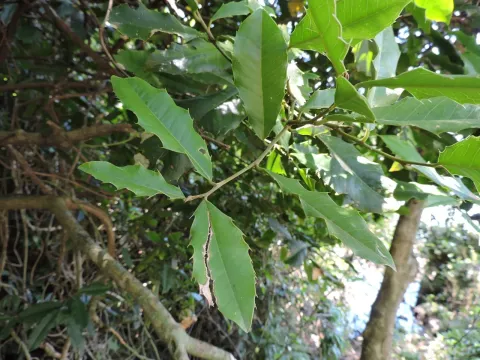
Zollernia is a genus of evergreen trees belonging to the Fabaceae (legume) family. These trees are native to the tropical regions of South America, primarily inhabiting dense and humid forest environments where biodiversity is at its peak.
What the section contains


Zollernia
The plant requires deep, fertile, and well-drained soils to thrive. It is extremely sensitive to cold temperatures and cannot survive in frost-prone climates, which significantly limits its cultivation potential to tropical and subtropical zones.
High relative humidity and stable warm temperatures are essential for the healthy physiological development of the tree. As a species adapted to the forest interior, it relies on specific light conditions that facilitate steady growth over many years.
Successful cultivation requires mimicking the complex microclimate of the rainforest, where soil moisture remains consistent throughout the year. It does not tolerate prolonged dry seasons, which can negatively affect wood density and overall tree vitality.
Agricultural management of Zollernia is not yet fully commercialized, as the tree is often harvested from managed wild populations. Future research is focused on establishing plantation techniques that balance wood production with ecological preservation.
Zollernia is highly regarded in the timber industry for its exceptionally hard and dense wood. Its structural properties make it a premier choice for high-end applications where durability and resistance to wear are paramount.
The wood's aesthetic qualities, featuring dark hues and a fine texture, make it highly desirable for luxury woodworking. Craftsmen often utilize it for creating precision-tuned musical instruments and intricate interior design elements.
Harvesting practices involve selective logging techniques that prioritize the health of the surrounding ecosystem. Given the extreme density of the wood, specialized cutting equipment is required to process the raw timber into usable components.
Post-harvest treatment is crucial, as the material must be dried slowly to avoid cracking and warping caused by internal tension. Proper seasoning ensures that the timber remains stable during long-term construction or manufacturing projects.
Economically, Zollernia represents a valuable asset in the niche market of exotic timbers. Sustainable management of these trees is essential to ensure a continuous supply of this rare material while protecting the fragile tropical ecosystems where they grow.