
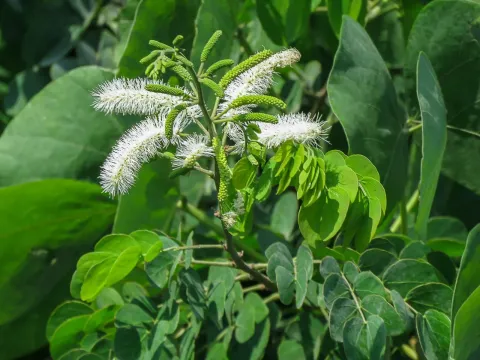
Mimosa caesalpiniifolia
Mimosa caesalpiniifolia
Mimosa caesalpiniifolia belongs to the Fabaceae family and is commonly propagated via seeds. To achieve optimal germination rates, seeds must undergo a scarification process to break their dormancy.
What the section contains
Mimosa caesalpiniifolia
Sowing typically occurs at the beginning of the rainy season, as the young seedlings require consistent moisture to establish their root systems during the early growth phase.
Container-grown nursery seedlings are highly recommended, as they provide a significant survival advantage when transplanted into the field compared to direct seeding.
Planting density is determined by the specific land use goals, ranging from high-density setups for dense living fences to wider spacing for timber woodlots.
The ideal ambient temperature for growth and development ranges between 25°C and 30°C, which is characteristic of its native tropical range.
This species is highly heliophilic, meaning it requires full exposure to sunlight to develop a straight, healthy trunk and maintain a robust canopy.
It is noted for its exceptional drought tolerance, allowing it to survive and thrive in regions with prolonged dry seasons that would kill less resilient species.
Mimosa caesalpiniifolia is versatile regarding soil quality, capable of growing in poor, acidic, or sandy soils where other crops struggle to survive.
Proper drainage is essential, as the plant does not tolerate waterlogged conditions, which can lead to root system degradation and susceptibility to pathogens.
In the initial years, providing supplemental phosphorus fertilizers can significantly accelerate biomass production and support deep root establishment.
The primary economic value of this crop lies in its timber, which is highly regarded for its hardness, density, and natural resistance to decay and termites.
In agroforestry systems, it serves as a valuable forage source; the foliage is rich in protein and is often consumed by cattle and goats during dry periods.
The wood is frequently utilized for agricultural infrastructure, including fence posts and structures that require long-term durability in outdoor environments.
As a legume, it contributes to soil fertility improvement through nitrogen fixation, making it an excellent candidate for land reclamation and soil regeneration.
Yield of green biomass can be maximized through a managed coppicing system, which allows for regular harvesting of branches while preserving the main stem.
The main biological threats include various defoliating insect larvae that can significantly reduce the photosynthetic surface of the plant during peak growth months.
Fungal infections are a concern during periods of high humidity and poor air circulation, specifically affecting young seedlings and preventing their successful establishment.
Management of invasive weed species around the base of the trees is crucial during the first 2-3 years, as competing vegetation can easily outcompete the young seedlings.
- Stem-boring insects.
- Leaf-eating weevils.
- Soil-borne pathogens in waterlogged sites.
- Browsing pressure from local wildlife.
Implementing an integrated pest management strategy ensures that the plantation remains productive while maintaining ecological balance within the local area.