
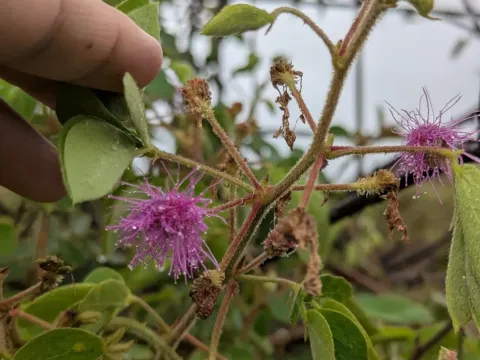
Mimosa albida
Mimosa albida
The sowing of Mimosa albida is typically conducted at the start of the rainy season when soil temperatures are sufficient and moisture ensures consistent germination. In tropical regions, planting immediately after the onset of stable rains is ideal.
What the section contains
Mimosa albida
Seeds often require scarification prior to planting due to their hard seed coat, which hinders moisture absorption. Soaking the seeds in warm water for several hours is a common practice to facilitate the swelling process.
Seeding rates vary depending on the intended use; for cover crop purposes, higher planting densities are utilized to achieve rapid ground coverage. Seeds should be planted at a shallow depth of 1–2 centimeters to ensure good soil contact.
Seedlings typically emerge within 7–14 days, provided the temperature remains between 22 and 28 degrees Celsius. Maintaining consistent soil moisture during the first few weeks is critical for establishing a robust root system.
Once established, the plant exhibits good tolerance to short dry spells. Regular weed management during the initial growth phase is essential to prevent competition and allow the plants to develop strong vegetative structure.
Mimosa albida belongs to the Fabaceae family and is native to tropical America. The crop is highly adaptable and performs well in well-drained soils, even thriving in poor, acidic, or degraded soil conditions.
Optimal growth requires ample sunlight, although the plant can tolerate partial shade. As a tropical crop, it is highly sensitive to frost, which limits its cultivation area to frost-free tropical and subtropical regions.
A major agronomic advantage of Mimosa albida is its ability to biologically fix atmospheric nitrogen. This trait makes it an invaluable component in agroforestry systems for naturally enhancing soil fertility.
The plant possesses a deep, well-developed root system, which serves as an effective tool for erosion control on sloping lands. Due to its symbiotic relationship with rhizobia bacteria, the crop reduces the need for synthetic nitrogen fertilizers.
In high-rainfall environments, the plant can be very vigorous and spread rapidly. Careful planning in crop rotation is necessary to manage its growth and prevent it from becoming an unwanted volunteer in subsequent crop cycles.
The primary agricultural utility of Mimosa albida lies in its biomass production, which is utilized as green manure to improve soil quality. Under favorable rainfall conditions, significant yields of high-quality organic matter can be achieved.
The plant is occasionally used as supplemental fodder for livestock, although caution is required due to certain phytochemical properties. It is generally best utilized as a limited protein-rich supplement for ruminants.
When used as green manure, the biomass is typically mowed and incorporated into the soil, where it decomposes rapidly. This process adds organic carbon and nitrogen, significantly boosting the yields of subsequent cash crops.
The plant responds well to periodic cutting, which stimulates regrowth and allows for multiple harvests per season. This flexibility makes it a highly efficient plant for sustainable and regenerative agricultural practices.
For seed production, a portion of the crop should be left unharvested until the pods mature. Seeds are collected manually or mechanically once the pods turn brown and dry to prevent excessive shattering and loss of material.
Mimosa albida generally exhibits strong natural resistance to many common plant diseases due to its specific secondary metabolites. However, in waterlogged conditions, it can become susceptible to root rot caused by Fusarium or Rhizoctonia fungi.
The most common pests include foliage-feeding insects, such as certain species of moth larvae. These pests can rapidly defoliate plants, significantly reducing the total amount of available biomass for soil improvement or fodder.
In specific humid environments, the crop may suffer from leaf spot diseases caused by pathogenic fungi. Maintaining proper spacing and ensuring good air circulation are the best management practices for minimizing these issues.
Occasional infestations of aphids or spider mites can occur, particularly during extended dry periods. Chemical interventions are rarely required and should only be employed if pest populations reach economic injury levels.
Integrated pest management, including crop rotation and field monitoring, is sufficient to keep populations in check. Balancing soil moisture and avoiding prolonged water saturation remains the most important factor in keeping the crop healthy.