
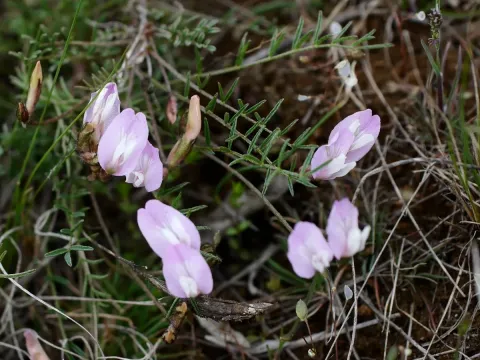
Milk-vetch
Astragalus corniculatus
Astragalus corniculatus, commonly known as a type of milk-vetch, is a perennial legume recognized for its ability to thrive in diverse environmental conditions. It is a robust plant that contributes significantly to soil nitrogen fixation.
What the section contains
Milk-vetch
Sowing should take place in early spring once soil temperatures reach a stable level of about 6-8 degrees Celsius. Because of the hard seed coat, scarification is a highly recommended pre-treatment to ensure faster and more uniform germination across the field.
Seed depth is critical; it should be placed no deeper than 1.5-2 centimeters to allow the relatively small seedlings to emerge successfully. A seeding rate of 10-15 kilograms per hectare is typically standard for row seeding to ensure optimal plant density.
Growth in the first season is characterized by a slow establishment period as the plant focuses on developing a deep, resilient root system. Weed management is therefore paramount during the initial year to prevent competition from aggressive annuals.
Once established, the plant becomes highly competitive and begins to form a dense stand. Its deep taproot allows it to persist for many years, providing a reliable source of green mass in various forage-based agricultural systems.
This species is well-adapted to a range of soil types but thrives best in well-drained loams or sandy soils. It shows a clear preference for neutral to slightly alkaline pH levels and performs poorly in waterlogged or acidic conditions.
Astragalus corniculatus is renowned for its excellent drought tolerance, attributed to its deep root structure that reaches sub-surface moisture. It is a suitable candidate for semi-arid regions where other forage crops might struggle to survive.
Climatic requirements involve moderate sunlight and good aeration. The plant is winter-hardy, capable of surviving harsh frost cycles, provided the soil is not prone to surface ice formation or pooling water, which can trigger crown rot.
Nutrient management focuses on phosphorus and potassium, which are essential for long-term health and root development. Excessive nitrogen fertilization should be avoided, as the plant naturally fixes atmospheric nitrogen through root nodule bacteria.
Proper site selection is key; avoiding fields with high water tables or heavy compaction will ensure the longevity of the stand. It is a valuable component in crop rotation strategies, particularly for soil structure restoration.
The primary threats to the health of the crop include fungal pathogens like powdery mildew and rust. These issues are most frequent in damp, humid summers or where plant density inhibits air circulation among the foliage.
Various insect pests, including weevils and aphids, may target the leaves and reproductive parts of the plant. Field monitoring is essential during the early vegetative stage to identify pest outbreaks before they reach critical economic thresholds.
Root rot is a significant concern in sites with poor drainage. Once established, root pathogens are difficult to manage, making preventative measures like choosing proper sites and ensuring good soil structure vital for crop health.
Integrated pest management, including the use of biological control agents and crop rotation, is highly encouraged. Keeping the crop healthy through balanced nutrition makes it significantly more resistant to common diseases and pest pressures.
Regular field inspections allow for early detection of issues. By removing affected areas or applying targeted treatments, farmers can protect the overall vitality of the plantation and ensure a productive harvest for several years.
Harvesting the crop for hay or green fodder is most productive during the early flowering phase. This timing captures the ideal balance between the biomass volume and the nutritional quality, including the protein and fiber content.
Standard mowing should be conducted at a height of 5-7 centimeters above the soil line to stimulate quick regrowth of the secondary foliage. Depending on the local moisture availability, multiple cuts per season are often feasible.
The drying process is crucial when making hay. Rapid curing helps maintain the integrity of the leaves, which hold the bulk of the crop’s vitamins and nutritional value. Over-drying or harsh mechanical handling can lead to leaf loss.
Seed harvesting requires attention to the maturity of the pods. Harvesting should occur when the pods are fully ripened to ensure maximum yield. Low-speed combine settings are recommended to prevent excessive mechanical damage to the seeds.
Post-harvest storage must be in a cool, dry environment to prevent the degradation of quality. Proper management of the harvest cycle not only secures the current yield but also promotes the sustainability of the perennial stand for future seasons.