
Jerusalem fenugreek
Trigonella hierosolymitana
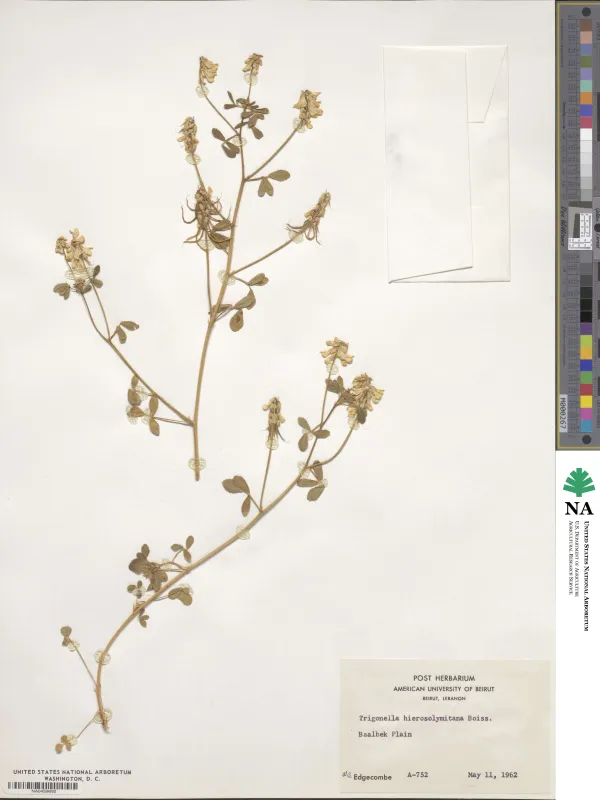
Description
Sowing dates
Jerusalem fenugreek (Trigonella hierosolymitana) is an annual leguminous herb native to the Eastern Mediterranean region, known for its specific ecological niche.
Sowing should take place in early spring when the soil temperature consistently reaches 10–12°C, ensuring optimal conditions for seed germination.
Seeds are typically sown at a depth of 1–2 cm, maintaining a row spacing of approximately 25–30 cm to allow sufficient space for plant development.
The plant requires a well-prepared seedbed, free from large clumps, to facilitate uniform emergence and prevent seedling damage during the early growth stages.
Early season management involves careful monitoring of crop density, as thinning might be required if the plant population becomes too crowded.
Growing requirements
This crop thrives in well-drained, light sandy or loamy soils, as it is highly sensitive to waterlogging and poor soil aeration which can inhibit root health.
As a heliophilic species, it requires direct sunlight for the majority of the day to ensure proper metabolic processes and quality development of pods.
While Jerusalem fenugreek is drought-tolerant, supplemental irrigation during the flowering stage significantly improves pod set and overall seed yield.
Soil pH should ideally be neutral or slightly alkaline, reflecting the natural limestone-rich habitats where this species is commonly found in the wild.
Fertilization should be balanced, with a focus on phosphorus and potassium, which support the legume's natural symbiotic nitrogen fixation processes.
Main diseases and pests
Common phytosanitary threats include root rots and powdery mildew, which are often exacerbated by poor air circulation and excessive atmospheric humidity.
Insect pests, such as aphids and nodule weevils, pose significant risks to the foliage and root nodules, potentially reducing the crop's nitrogen-fixing capacity.
Integrated pest management (IPM) strategies, including biological controls and selective crop rotation, are essential for maintaining a healthy and productive field.
Preventative cultural practices, such as removing crop residues after harvest and maintaining clean field borders, help minimize the buildup of soil-borne pathogens.
Regular field scouting is recommended to identify pest infestations or disease symptoms at the earliest possible stage for effective and localized mitigation.
Harvesting
Harvesting usually occurs when pods reach physiological maturity, indicated by a change in color and the start of natural drying on the plant stems.
Timing is critical to prevent yield loss from pod shattering, which is a common characteristic in many wild-type leguminous species including this fenugreek.
The harvested material should be dried in a sheltered, well-ventilated area to reduce seed moisture content to safe levels for long-term storage.
The product has diverse applications, ranging from culinary spice production to potential uses in herbal medicine due to its unique aromatic properties.
Proper storage involves keeping the dried seeds in airtight or breathable containers in a cool, dry place to prevent mold growth and loss of aromatic oils.