
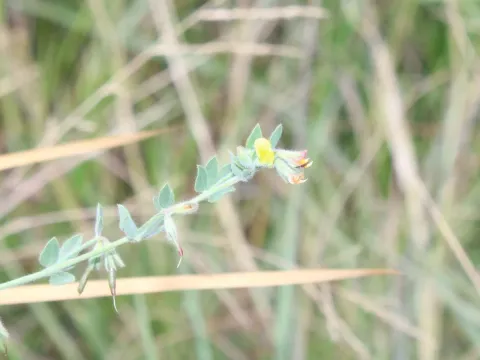
Greater bird's-foot trefoil
Lotus palustris
Sowing of Lotus palustris is typically carried out in spring, once soil temperatures reach 8–10 degrees Celsius. Seeds are characterized by high dormancy due to a hard coat, so scarification is recommended before planting to ensure uniform germination.
What the section contains
Greater bird's-foot trefoil
The optimal seeding depth is 1–2 centimeters, which ensures reliable moisture contact for the seeds. Sowing in rows is the preferred method for establishing productive pastures or meadows, with a standard seeding rate of 8–10 kg per hectare.
The plant exhibits slow initial growth during its first year, making early weed control essential for success. In subsequent years, it forms a dense and competitive sward that effectively suppresses undesirable species.
Rolling the soil lightly after sowing is beneficial to improve capillary water movement toward the seeds. This practice is particularly effective in peat soils or areas with high moisture content to facilitate rapid emergence.
While winter sowing is possible in mild climates, spring remains the most reliable time to avoid seedling mortality from extreme cold. The mature plant is frost-hardy, but early growth stages require stable environmental conditions.
Lotus palustris, a member of the Fabaceae family, is a unique crop adapted to waterlogged conditions. It thrives in lowland meadows, wetland margins, and areas with high water tables, where other legumes might fail.
The plant displays high ecological plasticity, capable of enduring prolonged flooding from seasonal rains. It prefers humic-rich loamy or peaty soils with a neutral or slightly acidic pH for optimal development.
Sufficient sunlight is required for effective photosynthesis, although the plant shows moderate tolerance to partial shading. Maximum biomass productivity is achieved in open, well-warmed, and nutrient-rich sites.
As a legume, it forms a symbiotic relationship with nitrogen-fixing bacteria, reducing the need for synthetic nitrogen. The application of phosphorus and potassium fertilizers significantly boosts root development and long-term yield.
Its high cold tolerance makes it a viable crop for colder regions. The plant is long-lived, often persisting in the sward for 5–7 years, which provides significant value for sustainable forage production systems.
The yield of green biomass depends heavily on the botanical composition of the pasture and the intensity of management. Under intensive cultivation, productivity can reach 200–300 centners per hectare.
In natural meadows, yield varies according to the annual hydrological cycle. Thanks to its deep root system, the plant maintains green biomass during dry spells better than many other legume species.
The nutritional value of Greater bird's-foot trefoil is high, containing significant amounts of protein and essential amino acids. It serves as a superior component for producing high-quality hay and silage.
The regrowth capacity is moderate, and regular harvesting or grazing stimulates tillering. Careful management of grazing cycles is necessary to maintain the health and density of the stand over time.
Seed production should be dedicated to specific fields with controlled moisture levels to ensure consistent yields. Well-managed stands can provide reliable seed crops for several consecutive years.
The primary threats to the crop include fungal diseases such as powdery mildew and various leaf spot pathogens. These diseases are most prevalent during seasons with high humidity and frequent rainfall.
Pests such as clover root curculio can cause damage to the root system, particularly in younger plants. Leaf beetles and aphids are also potential risks that can significantly reduce the biomass volume and quality.
Stagnant water can occasionally trigger root rot, leading to sparse patches in the field. Maintaining proper crop rotation and optimal plant density is key to preventing the spread of soil-borne pathogens.
Weed competition is most problematic in the first year when the plant's slow growth makes it vulnerable. Chemical or mechanical weeding during the early establishment phase is highly recommended.
The use of resistant cultivars remains the most effective defense strategy. Preventive management, including timely mowing, helps reduce the accumulation of inoculum in the stubble throughout the growing season.
Hay harvesting is best performed at the full flowering stage, when the nutritional concentration in stems and leaves is at its peak. This timing ensures high palatability and better preservation of vitamins.
For silage or haylage, early harvesting is preferred to improve fermentation efficiency, often in combination with grass species. This mixture creates a balanced and nutrient-dense forage product.
Seed harvesting requires careful timing, as the plant is prone to pod shattering. Operations are conducted when the majority of pods turn brown to minimize losses caused by wind or mechanical impact.
Direct combining in dry weather is the standard approach for seed collection. Pre-harvest desiccation is often used to facilitate the process and ensure a cleaner, higher-quality seed batch.
Post-harvest, the remaining straw can be utilized as roughage or incorporated into the soil as green manure. This adds organic matter and nitrogen to the field, enhancing soil fertility for future crops.