
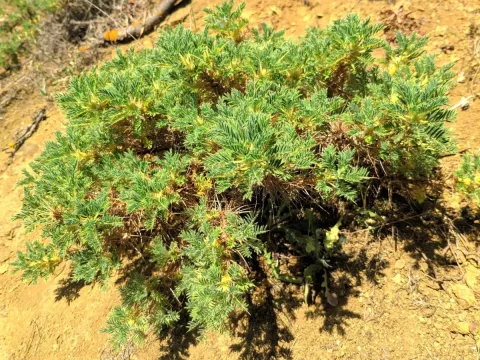
Grenada milkvetch
Astragalus granatensis
Grenada milkvetch (Astragalus granatensis) is a perennial herbaceous plant belonging to the Fabaceae family. Native to the Mediterranean region, it is well-adapted to high-altitude and mountainous environments with varying climatic conditions.
What the section contains
Grenada milkvetch
The plant is characterized by a deep taproot system, which provides excellent drought tolerance. This botanical feature allows it to survive in arid, rocky soils where nutrient availability is low and water retention is minimal.
Soil requirements for this species are specific: it thrives in well-drained, sandy or gravelly soils. It is highly intolerant of waterlogging, which can cause rapid decay of the taproot and collar, leading to plant mortality.
Cultivation requires full sunlight exposure. Astragalus granatensis is a sun-loving plant that produces more biomass when grown in open fields without canopy cover. It prefers neutral to slightly alkaline pH levels.
In agricultural practice, this legume is valued for its nitrogen-fixing capabilities. By hosting symbiotic bacteria in its root nodules, it contributes to soil enrichment, making it a sustainable choice for soil restoration projects and long-term crop rotation.
Fungal diseases are the primary threat to Grenada milkvetch crops, especially in high-humidity climates. Root rot is the most common issue, typically triggered by poor drainage or over-irrigation in stagnant soil conditions.
Powdery mildew can affect the leaves during damp, warm summer periods. This infection covers the foliage in a white coating, hindering photosynthesis and reducing the overall vitality of the plant stand.
Pest pressure often includes various weevil species that target the reproductive parts, specifically flowers and developing seed pods. Severe infestations can lead to a significant decline in seed yield and plant vigor.
Management of these threats relies heavily on preventative agronomic practices. Ensuring excellent field drainage and maintaining appropriate plant spacing are critical to keeping fungal infections at bay.
When pests exceed economic thresholds, specific integrated pest management strategies should be deployed. Regular scouting of the field is recommended to apply treatments effectively and maintain crop health throughout the growing season.