
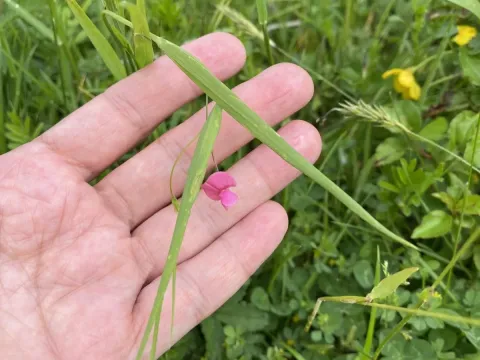
Grass Vetchling
Lathyrus nissolia
The Grass Vetchling (Lathyrus nissolia) is an annual herbaceous plant belonging to the Fabaceae family. Unlike many other vetchling species, it is characterized by its grass-like appearance, as its true leaves are reduced to simple, linear structures that resemble the foliage of cereal grasses.
What the section contains
Grass Vetchling
The native range of this species extends across Europe, the Mediterranean region, and parts of Western Asia. It typically thrives in diverse environments, such as grasslands, meadows, and clearings, preferring sites that receive adequate sunlight and feature fertile, well-drained soil.
Regarding cultivation requirements, the Grass Vetchling adapts well to a variety of soil types, including loams and clays, provided they have a near-neutral pH level. It shows moderate resistance to cooler temperatures, making it suitable for regions with temperate growing seasons.
From an agronomic perspective, this plant is valued for its nitrogen-fixing capabilities, which enhance soil fertility and support the growth of neighboring species in pasture mixtures. Its inclusion in forage programs contributes to improving the protein content of the total biomass.
Effective cultivation involves managing weed competition during the early stages of growth, as the plant may be slow to establish itself in a dense sward. Proper spacing and sowing depth are crucial for ensuring uniform stand emergence and competitive vigor.
The most common diseases affecting this crop include various species of powdery mildew and leaf spot pathogens, which typically flourish in warm, humid conditions during the mid-growing season.
Pest pressures are primarily caused by pea weevils and aphids, which feed on the sap and developing seeds, potentially impacting both the nutritional value and the yield potential of the crop.
Effective management strategies rely on integrated pest management (IPM) practices, including the use of resistant varieties where available and timely monitoring of insect population densities.
Crop rotation serves as the primary preventative measure to reduce the soil-borne inoculum of pathogens that frequently affect legume populations in intensive farming systems.
Sustainable agricultural practices, such as maintaining healthy soil microbiology and balanced fertilization, remain essential to bolstering the plant's natural resistance to environmental stressors and biotic threats.