
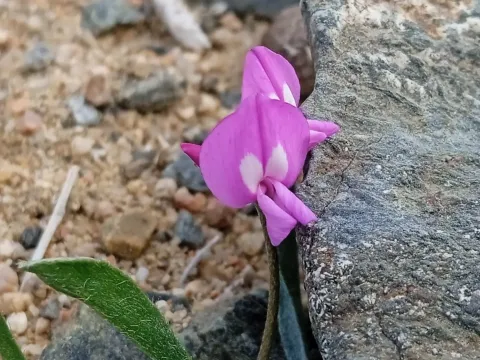
Gueldenstaedtia
Gueldenstaedtia
Gueldenstaedtia belongs to the category of perennial herbaceous plants, therefore sowing dates typically fall in early spring when the soil warms up to 8-10 degrees Celsius. April is considered the optimal window, allowing seeds to utilize accumulated moisture for uniform germination.
What the section contains

Gueldenstaedtia
Successful sowing requires prior seed scarification due to their dense outer coat. This process enhances germination energy and ensures an even stand across the field.
The sowing depth should not exceed 1-2 centimeters because the seeds have a small reserve of nutrients. If sown too deeply, the seedlings may perish before reaching the soil surface.
It is essential to select fields free from weeds, as Gueldenstaedtia develops slowly in the initial growth stages and is sensitive to competition for light and essential nutrients.
The seeding rate is calculated based on the intended use of the crop. When grown for green forage, planting density is increased to form a closed sward.
The crop belongs to the Fabaceae family and is valued for its nitrogen-fixing capabilities. The plant prefers well-drained, light-textured soils and should not be planted in areas prone to groundwater stagnation.
Gueldenstaedtia exhibits high resistance to drought periods and harsh climatic conditions, making it a promising candidate for arid zones. It successfully tolerates the temperature fluctuations typical of continental climates.
For optimal development, the crop requires a neutral or slightly alkaline soil reaction. In highly acidic soils, the effectiveness of the symbiosis with nodule bacteria decreases significantly.
The plant is light-loving; therefore, positioning it in open, well-lit areas is a mandatory requirement for producing high-quality yields of green biomass or seeds.
The application of phosphorus and potassium fertilizers significantly increases winter hardiness and crop productivity by promoting powerful root system development, which is vital for long-term stand management.
The yield of Gueldenstaedtia depends largely on the weather conditions during the growing season and the availability of moisture during the active regrowth phase. It shows stable productivity when agricultural guidelines are followed.
Its primary economic value lies in the accumulation of nutrient-rich biomass high in protein. Under moderate irrigation, the green mass yield can reach significant levels for this group of legume grasses.
Maximum seed output is typically observed in the second or third year of the crop's life cycle, once the plant has fully adapted to the site conditions and developed a robust vegetative mass.
Regular fertilization with micronutrients, such as boron and molybdenum, contributes to improved seed set and increases the overall harvest per hectare.
Economic use includes utilizing the crop as a valuable forage component or as a means to restore soil fertility through atmospheric nitrogen fixation.
Major diseases of the crop include fungal infections such as root rot and powdery mildew, which flourish in high humidity and dense plantings. Prevention is achieved through strict crop rotation.
Pest threats are primarily dominated by nodule weevils, which damage the root system and inhibit the activity of nitrogen-fixing bacteria. Aphid infestations may also occur during periods of prolonged drought.
Agricultural control methods, such as proper soil cultivation before sowing, are used to manage pest populations by destroying insect larvae in the topsoil.
Using resistant cultivars is the most effective method for protection against specific pathogens found in the region where Gueldenstaedtia is being cultivated.
Chemical control measures are only justified during mass pest outbreaks when the economic threshold is exceeded, always respecting mandatory waiting periods before harvesting.
Green mass harvesting is conducted during the flowering period, when the concentration of nutrients in the plant reaches its peak. This ensures high-quality forage for livestock production.
For seed production, harvesting is planned for the stage of full bean maturity, when they acquire their characteristic color and lose excess moisture. Avoiding over-maturation is crucial to prevent seed shattering.
Mechanical harvesting involves either direct combining or a two-stage method with pre-swathing for drying, which is particularly relevant in regions with frequent rainfall.
Post-harvest seed processing includes immediate cleaning of impurities and drying to standard moisture levels, which is necessary to ensure long-term storage quality.
Collected straw and residues can be used as mulching material, helping to accumulate organic matter in the soil and improve its overall physical structure.