
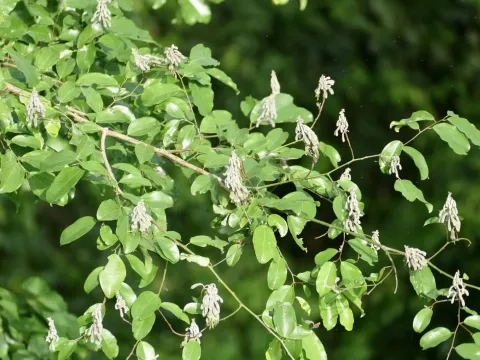
Griffonia
Griffonia
Griffonia simplicifolia is primarily propagated through seeds. In its natural environment, seeds germinate in warm, moist soil at the onset of the rainy season.
What the section contains


Griffonia
When cultivated in specialized nurseries, seeds require pre-sowing scarification to improve germination rates due to their hard outer coat.
The optimal temperature for seed germination ranges from +25°C to +28°C, provided that substrate moisture remains stable throughout the period.
Using a seedling-raising method is preferred, as it allows for better monitoring of young plants during their initial developmental months before field transplanting.
The crop grows slowly in the early stages, necessitating protection against weeds and regular watering until the root system is fully established.
The plant is a tropical shrub belonging to the Fabaceae family and has high requirements regarding its temperature and climate conditions.
Successful growth requires a hot and humid climate with no frost, as the griffonia plant is strictly intolerant to low temperature conditions.
Soils should be deep, fertile, and well-drained to avoid waterlogging at the root zone, a common environmental challenge in West African forests.
The crop prefers partial shade during its juvenile stage, whereas mature plants perform better under adequate levels of direct solar radiation.
Maintaining proper soil acidity is critical, with the pH range ideally falling between slightly acidic and neutral values for optimal nutrient uptake.
The plant's seeds are the primary commodity, valued for their high concentration of 5-hydroxytryptophan, a precursor widely used in the pharmaceutical industry.
Yields from wild populations are often limited, prompting commercial plantations to focus on optimizing the harvesting of the legume pods.
The average weight of an individual pod is relatively low, and uneven maturation requires manual labor during the harvest season.
Intensive farming technologies allow for stable yields of high-quality raw material through the application of organic fertilizers and site management.
The total content of target alkaloids in the final harvest depends heavily on adherence to agricultural protocols and proper post-harvest processing.
Griffonia is susceptible to various leaf-chewing insects and pests that are indigenous to the tropical regions where the plant naturally grows.
High levels of air humidity create risks for fungal infections that can damage the root crown and leaves of the shrub.
Nematodes pose a significant threat to the root system, particularly when the crop is grown in depleted or already infested soil types.
Under conditions of high planting density, the risk of mold infections increases, requiring regular sanitary pruning to improve air circulation.
Disease prevention is built upon rigorous adherence to agricultural standards, adequate airflow management, and the use of pathogen-free seeds.
Harvesting griffonia is a labor-intensive process because pods mature unevenly across different branches of the individual shrub.
Collection is carried out as the pods turn brown, ensuring they do not overdry, which could lead to spontaneous pod dehiscence and seed loss.
Gathered seeds undergo a cleaning process to remove debris and must be dried in the shade or using specialized drying chambers to preserve quality.
Maintaining low humidity during the storage phase is essential to prevent degradation of the biologically active components contained within the seeds.
The market quality of the harvest is determined by the purity of the seed batch and the absence of mold or fungal contamination after drying.