
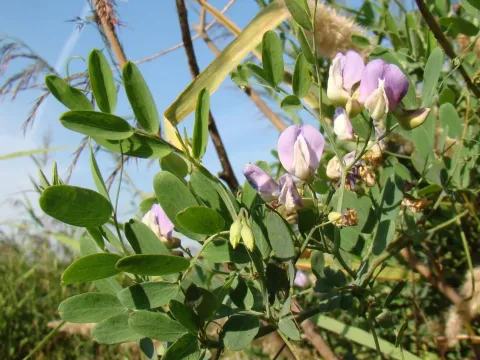
Lathyrus incurvus
Lathyrus incurvus
Lathyrus incurvus is a perennial legume species that requires specific preparation for successful establishment. Given its hard seed coat, scarification is often recommended to enhance water absorption and improve germination rates during the early stages of development.
What the section contains
Lathyrus incurvus
The optimal sowing period is during the early spring when soil temperatures reach approximately 8–10 degrees Celsius. Planting early allows the root system to establish effectively before the onset of potential summer drought periods, which is crucial for long-term survival.
Seeds should be planted at a depth of 3–5 centimeters. Soil texture plays a significant role in determining the exact depth: lighter soils allow for slightly deeper planting, whereas heavier, clay-based soils require shallower placement to avoid impeding seedling emergence.
Standard seeding rates are generally around 100–120 kg per hectare, typically implemented using row drills with a spacing of 15–20 cm. This density is necessary to ensure a uniform canopy that can efficiently suppress competing weed species during the early weeks.
Post-sowing soil compaction is an essential step in the agricultural process. Utilizing a roller after sowing ensures optimal seed-to-soil contact, which facilitates capillary moisture flow and promotes consistent, rapid germination across the entire field.
This crop thrives in well-drained loamy or sandy loam soils that possess a neutral to slightly alkaline pH. It is highly sensitive to acidic environments, so liming is a vital practice if the soil profile shows low pH levels prior to the planting phase.
Lathyrus incurvus is a sun-loving plant that requires full exposure to sunlight for maximum productivity. Shaded areas should be strictly avoided, as low light intensity leads to stunted growth, reduced leaf mass, and poor reproductive performance regarding seed set.
While the species exhibits moderate drought tolerance, it requires consistent moisture throughout the growing season to reach its full yield potential. The most critical period for water availability is during the vegetative growth and flowering stages of the plant's life cycle.
The crop is characterized by high winter hardiness, allowing it to be cultivated successfully in various temperate climatic zones. The root system remains dormant throughout the winter and resumes growth as soon as soil temperatures permit in the spring.
In terms of crop rotation, Lathyrus incurvus serves as a beneficial partner. Its ability to fix atmospheric nitrogen through symbiotic root nodules makes it an excellent predecessor for subsequent cereal crops, significantly reducing the need for synthetic fertilizers.
The primary economic focus of this crop is the production of nutrient-rich forage and high-quality hay. Depending on soil fertility and management intensity, yields of green matter can range from 15 to 25 tons per hectare, providing reliable seasonal yields.
Nutritionally, the forage is highly valued for its protein content and balanced amino acid profile. It is considered an excellent feed source for livestock, contributing to healthier growth rates and improved production in dairy and meat operations.
To maximize yields, proper fertilization management is necessary. Focus should be placed on phosphorus and potassium inputs, which strengthen the root structure and enhance the plant's ability to withstand environmental stress and biotic pressures.
The plant demonstrates a strong capacity for regrowth, usually allowing for 2–3 successful cuts per growing season once the stand is established in its second or third year. This provides a consistent feed supply throughout the warmer months of the year.
Seed production is an additional potential income stream. With careful management during the pollination period, farmers can achieve stable yields of high-quality seeds, which can be retained for future farm use or marketed as professional planting material.
Fungal diseases, such as powdery mildew and anthracnose, are the most common biological threats to the crop. These pathogens thrive in high-humidity conditions and dense stands where airflow is restricted, leading to significant foliage loss if not managed.
Insect pests including pea weevils and aphids can cause substantial damage to young seedlings and developing buds. Effective pest management strategies, such as integrated pest management (IPM), are essential to prevent outbreaks from reaching economic thresholds.
Weed competition is particularly challenging during the first year of establishment. Mechanical inter-row cultivation is frequently employed to manage weeds without the need for excessive chemical intervention, ensuring the crop has adequate space for development.
Preventive measures include the use of high-quality, treated seeds to minimize the risk of soil-borne pathogens. Maintaining proper field hygiene and ensuring sufficient spacing between plants can significantly reduce the incidence of many common fungal diseases.
Chemical control via insecticides or herbicides should be used judiciously and strictly in accordance with local environmental regulations. Protecting pollinator health, especially during the flowering stage, is paramount when considering any chemical applications.
The timing of the harvest depends heavily on the intended use of the crop. For high-quality hay, harvesting should occur at the early flowering stage to ensure the highest concentration of vitamins and protein before the stems become overly lignified.
Proper hay drying technology is essential to maintain color and nutritional value. The moisture content of the baled hay should be reduced to 17–18% to prevent the risk of mold growth and spontaneous heating during long-term storage in barns.
Seed harvesting is conducted using a combine harvester when the pods reach full maturity. Because seeds are prone to shattering as they dry, the timing of the harvest is critical to minimize loss and ensure the maximum recovery of the seed crop.
After harvesting, immediate cleaning and drying of the seeds are required to maintain long-term viability. Storage should be in a cool, dry, and well-ventilated environment to ensure the seeds remain in peak condition for the next sowing cycle.
The final cut of the season must be timed at least a month before the first hard frost. This allows the plants to store sufficient energy reserves in the roots, ensuring they can overwinter successfully and emerge vigorously in the following spring.