
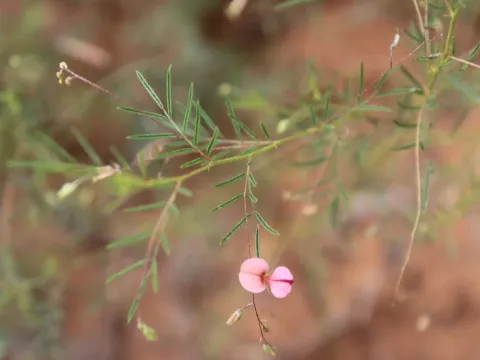
Indigofera filipes
Indigofera filipes
Indigofera filipes is a perennial legume species valued in agriculture for its ability to produce high-quality forage and its potential for soil nitrogen fixation. It typically thrives in tropical and subtropical regions where thermal conditions allow for a long growing season.
What the section contains
Indigofera filipes
Sowing should be performed when the soil temperature consistently exceeds 18°C. Providing a well-prepared, friable seedbed is essential to ensure uniform germination, as the seeds benefit from consistent contact with moist soil particles.
Seed scarification is often recommended before planting to break physical dormancy, which significantly increases germination speed and ensures a more uniform crop establishment across the field.
Row spacing should be calibrated based on the intended use; denser planting is preferred for green forage production, while wider spacing facilitates better seed development and weed control management.
The application of rhizobial inoculants specific to the genus Indigofera is highly recommended at the time of sowing to maximize the plant's natural nitrogen-fixing capabilities and reduce dependence on synthetic fertilizers.
This crop prefers well-drained soil types, including sandy loams, and performs best in environments with neutral to slightly acidic pH levels. Proper drainage is crucial to prevent root rot in wetter seasons.
Sunlight exposure is a primary requirement for Indigofera filipes. While it is adaptable, it produces the highest biomass yields under full sun conditions, as shade significantly retards plant development.
The plant demonstrates good tolerance to moderate drought after establishment due to its deep root system, although periodic irrigation is required for high-yield forage production in arid climates.
Optimal temperature ranges for growth fall between 20°C and 30°C. The species is sensitive to frost and extreme cold, which can terminate its growth cycle or permanently damage the plant's vascular tissue.
Mineral nutrition should focus on maintaining adequate phosphorus and potassium levels, as these nutrients are essential for the energy transfer and protein synthesis that define this legume’s productivity.
Like many leguminous crops, Indigofera filipes is susceptible to various fungal pathogens, such as leaf spot and root rot, especially in high-humidity conditions with poor air circulation.
Insect pests, including aphids and pod-borers, can cause significant damage during the flowering and seed-set stages. Monitoring for these pests is vital during the reproductive phase of growth.
Weed competition is most problematic during the early seedling stage. Once established, the crop usually forms a dense canopy that effectively suppresses most weeds, but early-season cultivation is necessary.
Management of these threats often involves integrated pest management (IPM) practices, such as choosing resistant varieties, crop rotation, and the judicious use of biopesticides to protect beneficial insects.
- Monitor fields for foliage discoloration.
- Ensure adequate spacing to improve airflow.
- Utilize crop rotation to break pathogen cycles.
- Practice timely weed control during the seedling stage.
Harvesting for forage is most effective during the early flowering stage. This timing captures the highest protein content while ensuring the plant remains palatable and digestible for livestock.
For seed production, the crop should be harvested once the pods have turned brown but before they become overly brittle, which helps minimize seed shatter losses during the mechanical harvesting process.
When grown as a green manure crop, it should be incorporated into the soil shortly before the flowering stage. This stage ensures maximum biomass accumulation and high nitrogen content for soil enrichment.
Mechanical equipment, such as forage harvesters, should be operated at reduced speeds to prevent excessive leaf loss and to ensure that the delicate plant material is processed without unnecessary fragmentation.
Post-harvest management involves rapid drying or ensiling of the biomass to prevent nutrient degradation and mold growth, which are significant risks if the material is stored with high moisture content.