
Water locust
Gleditsia aquatica
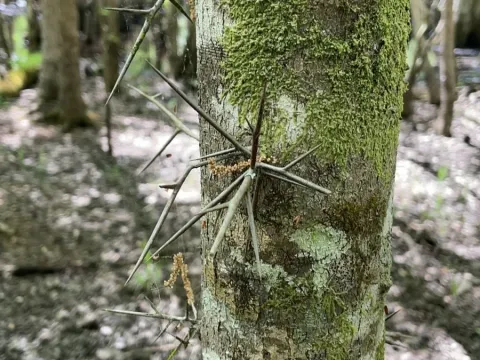
Water locust (Gleditsia aquatica) is a deciduous tree belonging to the Fabaceae family. It is native to the southeastern United States, specifically thriving in river swamps and floodplains. This species is biologically adapted to survive in water-logged soils, where other trees would struggle.
What the section contains
Water locust
The cultural requirements for this tree center on moisture and soil fertility. It performs best in nutrient-rich, deep soils that maintain high moisture content throughout the year. While it can tolerate standing water, it also requires full sunlight exposure to maintain a healthy growth rate and foliage density.
Regarding climate, this species is suited for temperate to subtropical regions. It is relatively hardy but thrives best in protected areas where extreme temperature fluctuations and harsh winter winds are minimized, which allows for better establishment of its characteristic thorny branches.
Management practices include monitoring the soil moisture levels and providing supplemental nutrients during the early stages of growth. Proper spacing during planting is essential to ensure adequate airflow and sunlight penetration into the crown, which minimizes the risk of structural deformities.
The economic and practical use of the Water locust includes wetland restoration, erosion control along stream banks, and ornamental planting in large garden spaces. Its wood, though similar to other species of the genus, is prized in local woodworking for its durability and resistance to rot in moist environments.
Common health issues for Gleditsia aquatica include fungal pathogens that thrive in high-humidity habitats. Maintaining clean culture, which involves the periodic removal of dead wood and leaf litter, helps to prevent the spread of infections throughout the canopy.
Pest management focuses on monitoring for typical locust-feeding insects, such as mites or webworms, during the peak summer months. Using sustainable pest control strategies helps maintain tree vigor without damaging the delicate wetland ecosystems where these trees are often planted.