
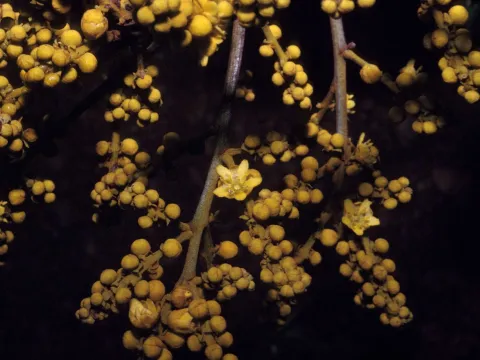
Vouacapoua
Vouacapoua
Vouacapoua is a genus belonging to the Fabaceae (legume) family. These trees are native to the tropical rainforests of South America, primarily flourishing in the Amazon basin and parts of French Guiana.
What the section contains

Vouacapoua
The species thrives in deep, fertile, and well-drained soils, typically found in humid tropical climates. It requires consistent year-round high temperatures and significant rainfall to maintain its growth cycles.
Botanically, Vouacapoua americana is characterized by its significant height and exceptionally hard, durable timber. The tree typically develops a dense canopy that plays a vital role in the ecosystem of its native forest.
From an agricultural standpoint, management focuses on sustainable forestry rather than intensive cultivation. It is vital to protect the soil ecology and symbiotic relationships that support the growth of these large trees.
The timber, commercially referred to as acapou, is highly prized for its resistance to decay, termites, and fungal attacks, making it a premium choice for outdoor construction and heavy-duty woodworking.
The primary threats to Vouacapoua involve susceptibility to tropical root rot pathogens when soil conditions become overly saturated or stagnant for prolonged periods.
Pests such as specialized wood-boring beetles can affect the trees, especially when the specimens are stressed by environmental changes or lack of adequate shade.
Deforestation and habitat fragmentation remain the most significant threats to the long-term survival of the species, as it requires extensive tracts of mature forest to reproduce successfully.
Climate change, manifesting in altered rainfall patterns in the Amazon, presents a growing challenge to the natural regeneration rates of the forest population.
Efforts to preserve the species include strict regulation of logging practices and the implementation of reforestation programs that prioritize the health of the local forest biome.