
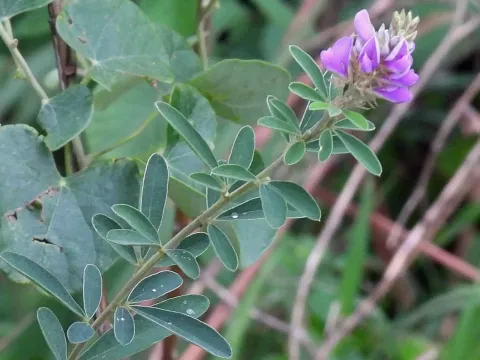
Wedge-leaf tick-trefoil
Desmodium cuneatum
Wedge-leaf tick-trefoil (Desmodium cuneatum) is a perennial member of the Fabaceae family. It is increasingly recognized in agricultural circles for its potential as a high-protein forage source in suitable tropical and subtropical climates.
What the section contains
Wedge-leaf tick-trefoil
Sowing should be scheduled to align with the onset of warm, frost-free weather, typically when soil temperatures reach 18-20°C. Seeds should be planted at a shallow depth of approximately 1-2 cm to ensure optimal emergence rates.
Before sowing, land preparation is crucial; it involves clearing existing vegetation and ensuring a fine seedbed. Given the seed coat's hardness, mechanical or chemical scarification is often recommended to improve germination consistency.
Planting density should be optimized based on the desired outcome, whether for grazing pasture, hay production, or seed multiplication. Proper spacing prevents excessive competition while maintaining ground cover to suppress weed growth.
Seedlings require careful monitoring during the first few weeks after emergence. Adequate soil moisture is vital during this establishment phase to ensure the development of a strong taproot system capable of sustaining the plant later.
This species thrives in warm environments with high light intensity. It is relatively adaptable to varying soil textures, ranging from sandy loams to heavier clays, provided that drainage is adequate and waterlogging is avoided.
Desmodium cuneatum exhibits notable tolerance for acidic soil conditions, often performing well where other legume species fail to thrive. This adaptability makes it a valuable candidate for improving degraded or marginal lands.
Temperature is the primary limiting factor for growth. The plant is highly sensitive to frost; even light freezing can cause extensive damage to the foliage, necessitating a focus on frost-free growing seasons or tropical latitudes.
Adequate sunshine is essential for the plant's metabolic activity. Research indicates that shaded areas lead to reduced biomass production and a decrease in nitrogen fixation rates, which directly impacts the crop's nutritional quality.
Balanced fertilization, particularly with phosphorus, is recommended to support root health and nodule formation. Since it is a legume, it performs best when the soil environment facilitates healthy symbiosis with nitrogen-fixing bacteria.
The primary threats include fungal leaf spot diseases that thrive in conditions of high humidity and poor air circulation. Management strategies emphasize proper row spacing and avoiding overhead irrigation during peak humidity times.
Pests such as leaf-eating insects and certain weevil species can affect foliage density. Integrated Pest Management (IPM) practices, including the use of pheromone traps and beneficial insect habitats, are highly effective.
Nematodes represent a significant soil-borne risk, particularly in intensive cultivation systems. Implementing a diverse crop rotation cycle is essential to break the life cycle of these subterranean pests and maintain soil health.
Nutrient deficiency, particularly related to molybdenum or boron in acidic soils, can mimic disease symptoms by causing chlorosis or stunted growth. Regular soil testing helps distinguish between physiological stress and true infection.
Ensuring that the source of seed is certified disease-free is the first line of defense. By maintaining healthy, vigorous stands through proper nutrition, the crop naturally develops a greater resilience against minor pest pressures.
Harvesting for forage should occur before the onset of flowering to maximize nutritional value. At this stage, the protein content is at its peak, and the stems are still tender enough for optimal digestibility in livestock.
Mechanical harvesting via mowing is the most common approach for hay production. It is recommended to leave a stubble height of at least 5-10 cm to ensure rapid regrowth from the base of the plant following the harvest.
Drying the harvested material requires careful attention to humidity levels. Ideally, the forage should be sun-dried or mechanically cured until the moisture content is low enough to prevent spoilage and mold development during storage.
If the crop is intended for seed production, harvest should be delayed until the pods are mature and exhibit a distinct color change. Early harvesting of pods leads to high proportions of immature, non-viable seeds.
Frequency of harvest is contingent upon environmental conditions and plant recovery rate. Under optimal management, multiple cuts per season are possible, significantly increasing the total dry matter yield per hectare.