
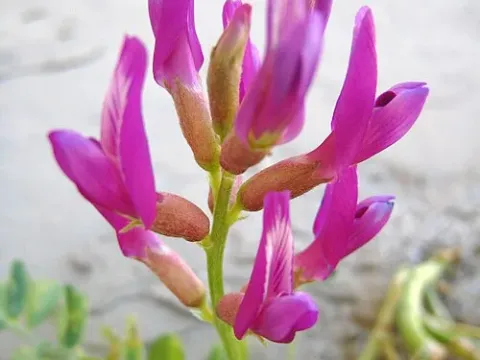
Wandering milkvetch
Astragalus peregrinus
The wandering milkvetch (Astragalus peregrinus) is an annual leguminous plant known for its ability to thrive in challenging environments. It belongs to the Fabaceae family and is primarily found in arid regions of the Middle East and Northern Africa.
What the section contains
Wandering milkvetch
As a xerophyte, this plant has adapted to survive with minimal water resources. Its deep taproot system allows it to reach water reserves in the soil, while its structural growth protects it from extreme heat and desert winds.
The botanical characteristics include a robust root system and specialized foliage that minimizes transpiration. These adaptations make it a suitable candidate for stabilizing loose, sandy soils in regions prone to desertification and erosion.
Regarding climate requirements, the species favors high levels of solar radiation and warm temperatures. It is intolerant of waterlogging, which can easily trigger physiological distress or root decay, thus requiring well-drained, porous soil conditions.
Agriculturally, this plant contributes to soil health through symbiotic nitrogen fixation. By housing nitrogen-fixing bacteria in its nodules, it naturally enhances the nutrient content of depleted soils, acting as a green manure in arid agricultural systems.
Pathogenic fungi represent the primary threat to this crop, especially when humidity levels exceed the plant's tolerance threshold. Root rot is a significant concern that can lead to total crop failure if soil drainage is inadequate.
Insect pests, particularly weevils of the Sitona genus, commonly target the young seedlings. They feed on the leaf margins and nodules, which disrupts the nitrogen-fixing process and severely hinders the growth rate of the plants.
Aphids pose a recurring problem by colonizing the flowering stems during the reproductive phase. Their feeding behavior results in stunted growth and the potential transmission of viral diseases, which can significantly lower seed yields.
Weed management is critical in the early growth stages due to the plant's slow initial development. Without sufficient weeding, the wandering milkvetch can easily be overwhelmed by more competitive invasive species that deplete resources.
To maintain a healthy crop, growers should implement a strict crop rotation policy. Avoiding consecutive plantings on the same plot helps prevent the accumulation of soil-borne pathogens and minimizes the impact of specialized insect populations.